CN
CN  EN
EN 
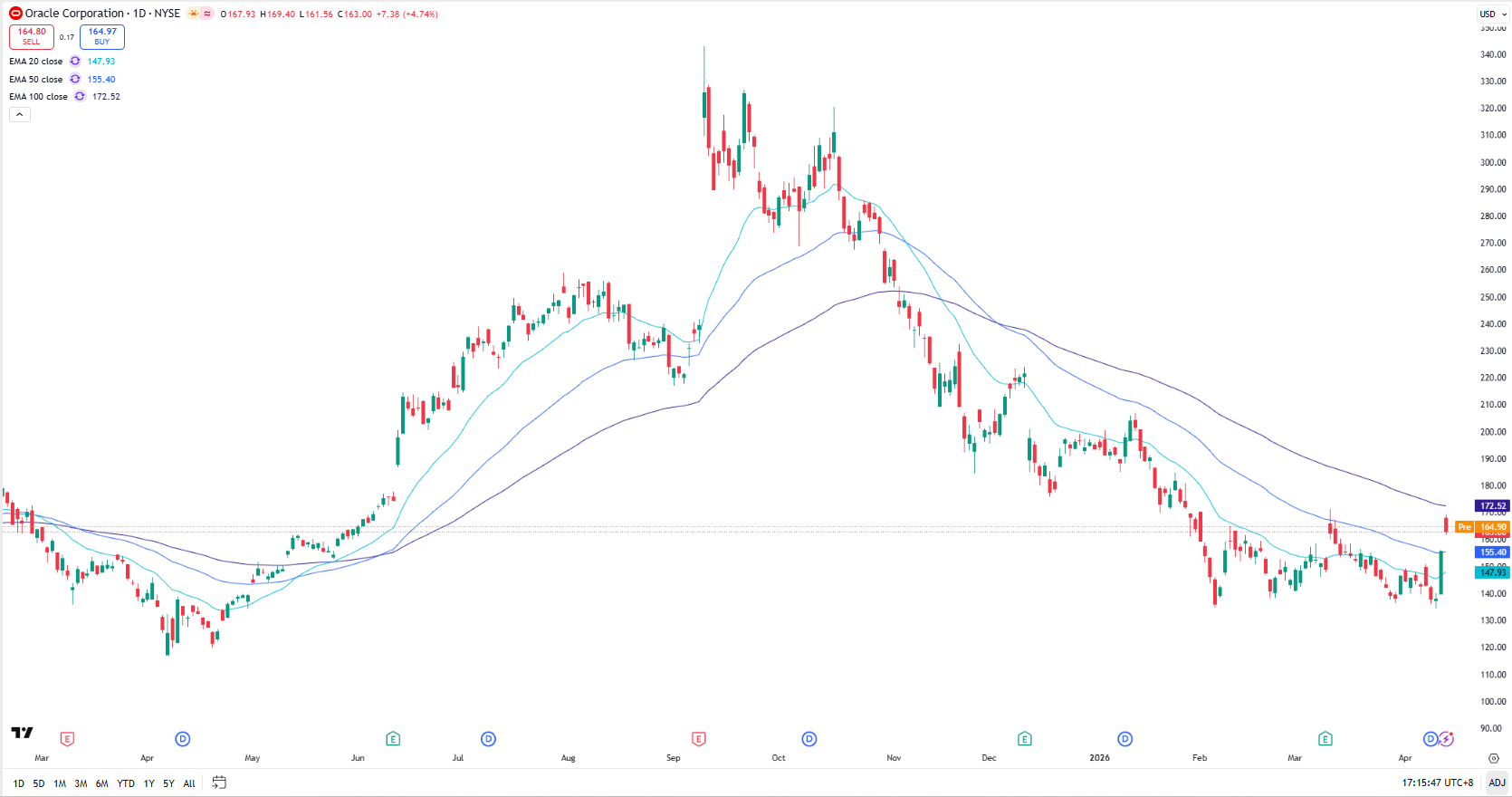
The enterprise software landscape witnessed a seismic shift on 13 April as Oracle (NYSE: ORCL) surged +12.7%, marking its largest single-day gain in seven months. Closing at $155.62 on a robust volume of 25.4 million shares, the rally wasn’t just a flash in the pan—it was a sophisticated “triple threat” of fundamental catalysts, technical exhaustion, and a broader sector rotation.
For traders and investors who have watched Oracle struggle through a 28% year-to-date decline, this move signals a potential regime change in the stock’s price action.
The Perfect Storm: Why the Narrative Shifted
While the S&P 500 managed a respectable +1.02%, Oracle significantly outperformed its heavyweight peers like Adobe (+6%) and Salesforce (+5%). The move was driven by four key pillars:
- Vertical AI Integration: Oracle launched AI-powered upgrades to its Utilities Industry Suite and Aconex platform. By targeting the energy sector—which is currently under massive strain from the very AI data centers Oracle builds—the company has created a “virtuous cycle” of demand that resonates with institutional ESG and infrastructure mandates.
- Geopolitical Tailwinds: Optimism surrounding a potential U.S.–Iran ceasefire pulled investors back into risk assets. High-beta software names, which had been battered by macro uncertainty, saw a disproportionate influx of “buy-the-dip” capital.
- The “Oversold” Technical Breakout: After plunging 54% from its September 2025 peak, the stock finally reclaimed its 20-day and 50-day moving averages. This technical “golden cross” in a deeply oversold territory forced short-sellers to cover and momentum algorithms to flip long.
- Global Footprint Expansion: The announcement of a new public cloud region in Casablanca, Morocco, underscores Oracle’s commitment to data sovereignty—a critical competitive edge in securing high-margin government and enterprise contracts.
The Strategic Context: Short-Term Pain, Long-Term Alpha?
Context is king in capital markets. Only two weeks ago, Oracle executed a massive restructuring, cutting approximately 30,000 roles. While such a move can often signal distress, the market’s positive reaction—both then and now—suggests a different interpretation.
Investors are viewing this as a “Strategic Pivot.” By aggressively trimming legacy overhead, Oracle is freeing up the capital necessary to fund its massive AI data center buildout. The market is no longer punishing Oracle for the layoffs; it is rewarding the company for its lean, AI-first conviction.
The Bottom Line: Bull vs. Bear
Despite the double-digit surge, the road ahead requires a balanced perspective.
The Bull Case:
- Contracted Revenue: A staggering $553B in future contracted revenue (up 325% YoY) provides a massive safety net.
- Growth Trajectory: FY2027 revenue guidance has been raised to $90B, supported by the best quarterly earnings growth in 15 years.
The Bear Case:
- Debt & Execution: The AI buildout is capital-intensive, leaving Oracle with a heavy debt load.
- Recovery Gap: Even after today’s rally, the stock remains down 23% for the year, meaning it still has a significant mountain to climb to reach previous highs.
The Verdict: Oracle has successfully transitioned from a “legacy software” laggard to a credible “AI infrastructure” play. For the disciplined trader, the focus now shifts to whether the $155 level can flip from resistance to support in the coming sessions.
Invest in Fractional Shares from just $1, at a flat fee of USD0.38. Click here to learn more now!
在 NOVA 交易 CFDs、ETF、外汇、期货、期权、贵金属和股票
NOVA 交易功能
- 接通超过 20 个全球交易所 通过超过 20 个全球交易所的 200 多个环球期货产品,把握市场机会。
- 全球股票交易机会 覆盖新加坡、美国、中国、香港、马来西亚及日本市场超过 11,000 只股票和 ETF。
- TradingView 图表支持 查看实时图表,并使用超过 100 种技术指标。
- 真正的多资产交易 通过 NOVA 的单一账簿,交易 CFDs、ETF、外汇、期货、期权、贵金属及股票。
- 美元及新元股票融资利率低至 4.5% p.a.
- 美股碎股低至 1 美元起
以低至 1 美元名义金额开始投资美股碎股,每笔订单佣金为 0.38 美元。