 CN
CN  EN
EN 

股票
从在中国、香港、马来西亚、新加坡和美国交易所上市的超过 11,000 只股票,房地产投资信托基金 (REITS)、每日杠杆证书 (DLC)、结构性认股权证 (SW) 以及成长型和股息收益股票中进行选择。

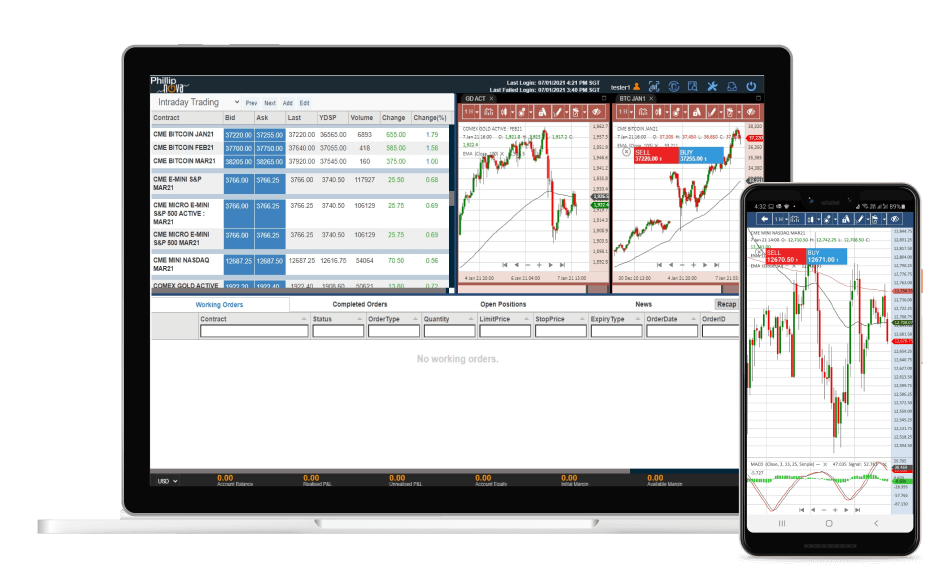
碎股是指完整股份的一部分。例如,持有 1.5 股意味着您拥有一股完整的股份和半股——这半股就是碎股。
金额型订单允许您指定要交易的总金额(以美元为单位),而无需输入股票数量。如果您希望投资固定金额(例如 50 美元),而无需计算确切的股票数量,则此功能非常有用。
对于不支持碎股交易的证券,系统会使用您输入的金额来计算并提交最大整股数量。
仅支持日内市价单和日内限价单。基于数量的订单不允许卖出。
支持碎股交易的证券
市价单
- 您输入的金额将直接作为基于金额的订单提交
市价单示例
- AAA 公司符合碎股交易条件
- 您使用市价单下单购买 200 美元
- 实际成交金额可能为 199.936 美元,具体取决于成交数量和成交价格
在订单中,您将看到预估订单数量及其预估金额。
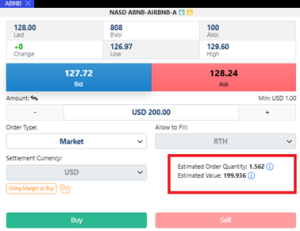
限价单
- NOVA会将您输入的金额转换为预估的股票数量(向下取整至小数点后三位),并使用该计算数量和指定的限价提交订单。
- 系统会提示您订单提交基于预估订单数量。
限价单示例
- AAA 公司符合碎股交易条件
- 您下单购买 200 美元,限价为 55 美元。
- NOVA 计算出的订单数量为 3.636 股(200 美元 ÷ 55 美元)。
- 此数量将以限价提交,最终成交金额最高为 199.98 美元(3.636 × 55 美元),但绝不会超过 200 美元。
在订单中,您将看到预估订单数量及其预估金额。
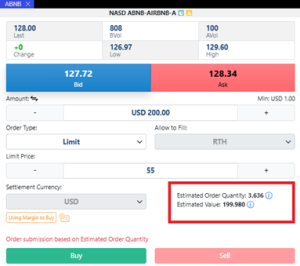
不支持碎股交易的证券
对于这些证券,基于金额的订单字段仅作为计算辅助工具。NOVA会根据适用价格将输入的金额转换为最大整股数量,并使用此计算结果提交订单。
市价单
- NOVA使用输入的金额除以当前市场价格来计算订单数量。
- 数量向下取整至最接近的整股。
- NOVA上显示的预估订单金额基于计算数量乘以当前市场价格。
- 系统会提示您订单提交基于预估订单数量。
市价单示例
- XYZ 公司不接受碎股交易。最新成交价为 40 美元。
- 您以市价单形式提交 100 美元的买入订单。
- NOVA计算并发送 2 股(100 美元 ÷ 40 美元)的市价买入订单。
- 实际成交数量可能与预估数量有所不同,具体取决于最终成交价。
在订单单中,您将看到预估订单数量及其预估金额。
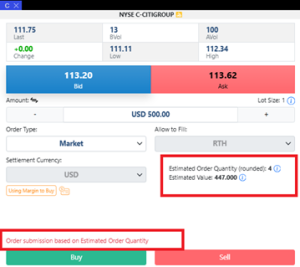
在订单确认框中,系统会提醒您,提交的数量是基于向下取整的数值。
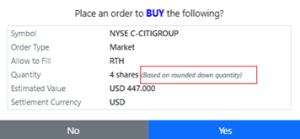
限价单
- NOVA 根据您输入的金额除以限价来计算订单数量。
- 然后将数量向下取整到最接近的整数股。
- 最终的实际订单金额为计算出的数量 × 限价。
- 系统会提示您,订单提交基于实际(向下取整)的订单数量。
限价单示例
- XYZ 公司不符合碎股交易条件。
- 您提交了一份金额为 100 美元、限价为 30 美元的订单。
- NOVA 系统计算并发送了一份购买 3 股(100 美元 ÷ 30 美元)的订单,购买价格为每股 30 美元。
- 提交的订单为 3 股,成交金额最高为 90 美元。
在订单单中,您将看到实际(向下取整)的订单数量及其预估金额。

在订单确认框中,系统会提醒您,提交的数量是基于向下取整的数值。
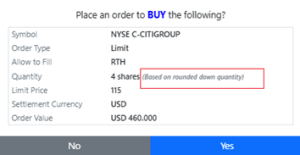
建议您在提交订单前始终检查计算出的股票数量。
NOVA 如何确定当前市场价格
美国证券:
- 使用常规交易时段的最后成交价。
- 如果最后成交价不可用,则使用收盘价。
非美国证券:
- 使用最后成交价。
- 如果最后成交价不可用,则使用收盘价。
- NOVA 网页/桌面版: 在自选股列表或订单中查找“碎股”列。饼图图标表示符合条件。
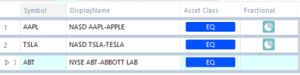
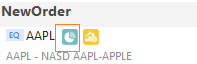
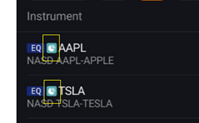
- 移动应用: 饼图图标会显示在自选股列表和订单中股票代码的旁边。

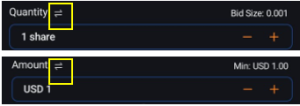
按数量计费的订单只能通过订单单下单。点击切换图标,即可将订单计费方式从“数量”切换为“金额”。再次点击该按钮,即可切换回“数量”计费方式。
- NOVA 网页/桌面版:

- 移动应用:
目前,只有美国交易所支持碎股交易和基于数量的订单,包括纽约证券交易所 (NYSE)、纳斯达克 (Nasdaq) 和美国证券交易所 (AMEX)。
但是,并非所有在这些交易所上市的证券都符合条件。只有支持碎股交易的证券才能以真正的基于数量的订单方式执行。
碎股订单会被发送到单独的交易平台。当您下单时,如果订单包含整股和碎股,则该订单会作为一个整体提交,但可能会分部分执行——整股和碎股分别执行——并且执行价格可能不同。
您必须选择加入并同意我们的碎股交易条款和条件。
您可以通过以下方式选择加入:
- NOVA 网页/桌面版: 设置 > 交易 > 开启碎股交易选项
- 订单: 选择“碎股交易”(仅对符合条件的证券可见)> 点击“同意”碎股交易条款和条件
碎股订单仅在正常交易时间内受支持。
交易碎股涉及的风险与交易整股类似,包括市场波动和证券特有风险。此外,碎股还可能面临流动性不足和执行限制等问题。
详情请参阅我们的《碎股交易披露声明》。 Fractional Shares Trading Disclosure Statement.
是的,如果股票派发股息,您将根据您持有的碎股数量按比例收到股息。
股东在股票拆分、合并或其他强制性公司行为中的权利和/或参与权由公司和/或发行人酌情决定。
没有,碎股份不具有投票权。
不可以,碎股票无法转入或转出您的账户。
按成交量下单的佣金根据成交数量计算。
请访问我们的网站 此处 查看最新的佣金结构和适用费用。
Phillip Nova’s Shares Margin Trading allows you to maximise your purchasing power by financing the purchase of marginable securities held in your trading account. Marginable securities refer to stocks and ETFs accepted by Phillip Nova as having collateral value for financing purposes.
A haircut is applied to these securities as a risk buffer. The discounted (net) value is then added to your buying power. All financing is subject to the prevailing haircut, security eligibility, and account‑level financing limits determined by Phillip Nova.
By using margin, you potentially get to:
- Amplify your investment capacity
- Take larger positions with the potential for higher returns.
- Generate positive carry
- Earn dividends or coupons that exceed the cost of financing.
- Access multi-currency financing
- Borrow in the traded currency to create a natural hedge against currency risk.
By using margin, you assume additional risks, including but not limited to:
- Leverage amplifies losses
- While you can invest more, losses are magnified in the same way as gains. You may lose more than your initial capital.
- Market Volatility and Gap Risk
- Sharp overnight movements or market gaps can cause losses that exceed your available margin before you have a chance to respond.
- Margin Calls and Forced Liquidation
- If the value of your marginable securities falls, you may be required to top up your margin at short notice. Phillip Nova can liquidate your positions without prior notice to meet margin requirements, and you remain liable for any shortfall.
- Carry trades can reverse
- If dividend yields fall or financing costs rise, a once-profitable carry may turn negative.
- Interest Rates Risk
- Financing costs (interest rates) are variable and can rise unexpectedly, eroding potential returns or turning profits into losses.
- 流动风险
- In times of market stress or low trading volumes, it may be difficult to sell your securities quickly without substantial price impact, especially during forced liquidations.
- FX risk
- Foreign-currency movements can impact both your returns and financing cost, as changes in exchange rates impact the value of your holdings and borrowings.
- Regulatory and Haircut Adjustments
- Phillip Nova may change the eligibility or haircut of marginable securities at any time. A sudden increase in haircut could cause an instant margin shortfall, triggering margin calls or liquidations.
- Concentration Risk
- Holding a few securities as marginable assets can lead to significant exposure if those securities experience sharp declines.
Illustrations of how leverage increases your investment capacity, potentially leading to higher returns.
Scenario 1 – Trading with Cash:
- You have S$10,000 cash in your trading account.
- You purchase 10,000 shares at S$1, totalling S$10,000 (10,000 shares x S$1).
- Your entire cash is used, so your buying power is reduced to S$0.
- The share price rises to S$1.25, and you sell your 10,000 shares for S$12,500
(10,000 shares x S$1.25).- Gross profit less commission = S$2,500(S$12,500 shares proceeds – S$10,000 initial purchase cost)
Scenario 2 – Trading with Margin:
- You have S$10,000 cash in your trading account.
- You use margin to buy 20,000 shares at S$1, totalling S$20,000 (20,000 shares x S$1).
- This will result in a loan of S$10,000
(S$10,000 initial deposit – S$20,000 shares purchased).- With a 30% collateral haircut, that leaves a net collateral value of S$14,000
(70% of S$20,000 collateral value)- This leaves a remaining cash balance of S$4,000 (S$10,000 initial deposit – S$20,000 shares purchased + S$14,000 of net collateral value).
This becomes your available buying power.
- After 7 days, the share price rises to S$1.25, making your holdings worth S$25,000 (20,000 shares x S$1.25).
- Net collateral value increases to S$17,500 (70% of S$25,000).
- Buying power increases to S$7,500.
(-S$10,000 loan + S$17,500 of net collateral value).- You sell your shares for S$25,000.
- Financing charges = S$9.59(S$10,000 loan x 5% p.a. x 7/365 days)
- Gross profit less commission = S$ 4,990.41(S$25,000 shares proceeds – S$20,000 initial purchase cost – S$9.59 financing charges).
Illustrations of how leverage increases your exposure to losses, potentially resulting in losses greater than your initial capital.
Scenario 3 – Trading with Cash:
- You have S$10,000 cash in your trading account.
- You purchase 10,000 shares at S$1, totalling S$10,000 (10,000 shares x S$1).
- Your entire cash is used, so your buying power is reduced to S$0.
- The share price falls to S$0.75, and you sell your 10,000 shares for S$7,500
(10,000 shares x S$0.75).- Gross loss less commission = S$2,500(S$7,500 shares proceeds – S$10,000 initial purchase cost)
Scenario 4 – Trading with Margin:
You have S$10,000 cash in your trading account.
You use margin to buy 20,000 shares at S$1, totalling S$20,000 (20,000 shares x S$1).
- This will result in a loan of S$10,000
(S$10,000 initial deposit – S$20,000 shares purchased). - With a 30% collateral haircut, that leaves a net collateral value of S$14,000
(70% of S$20,000 collateral value) - This leaves a remaining cash balance of S$4,000 (S$10,000 initial deposit – S$20,000 shares purchased + S$14,000 of net collateral value).
This becomes your available buying power.
- This will result in a loan of S$10,000
After 7 days, the share price falls to S$0.75, making your holdings worth S$15,000 (20,000 shares x S$0.75).
- Collateral haircut reduces to S$4,500 (30% of S$15,000).
- Net collateral value reduces to S$10,500 (70% of S$15,000).
- Buying power reduces to S$500.
(-S$10,000 loan + S$10,500 of net collateral value).
The next day you sell your shares for S$15,000.
Financing charges = S$10.96(S$10,000 loan x 5% p.a. x 8/365 days)
Gross loss less commission = S$5,010.96(S$15,000 shares proceeds – S$20,000 initial purchase cost + S$10.96 financing charges)
Phillip Nova applies several controls to promote prudent financing and risk management. These include application of collateral haircuts, security price caps (SPC), single‑security limits (SSL), and an account‑level maximum loan value (MLV). All parameters are subject to periodic review and may be adjusted at Phillip Nova’s discretion.
- Collateral Haircut – A discount applied to the market value of a security used as collateral. This helps ensure a safety buffer against market fluctuations, supporting responsible risk management.
- For example, if a stock is worth S$100 and has a 30% collateral haircut, only S$70 of its value will be counted as collateral.
- Security Price Cap (SPC) – A cap on the collateral valuation of each margin‑eligible security. This prevents artificially inflated or volatile market prices from overstating the collateral value and helps manage downside risk.
- For example, if a stock is trading at S$40 and has historically traded between S$10 and S$50, a price cap of S$80 may be applied.
- Single Security Limit (SSL) – A maximum collateral exposure per security to manage concentration risk.
- For example, if a Single Security Limit (SSL) of S$50,000 is applied to a stock, and you hold S$100,000 worth of it, only S$50,000 will be counted towards your collateral value.
- Maximum Loan Value (MLV) – A limit on the total financing extended to your account.
- For example, if your account has S$100,000 cash and the stock has a 50% collateral haircut, you would typically be able to purchase S$200,000 worth of the stock — borrowing S$100,000 from Phillip Nova. However, if a MLV of S$50,000 is applied, the maximum stock purchase would be limited to S$150,000.
| Not Opted In to Shares Margin Trading (Trading in Fully Paid-Up Securities) | Opted In to Shares Margin Trading |
Is Shares Margin Trading permitted? | No | 是的 |
Can I purchase securities of value greater than my Equity Balance? | No | 是的 |
Is multi-asset trading available? | Yes, if other trading pre-requisites are met. | Yes, if other trading pre-requisites are met. |
Am I subject to margin calls and forced liquidations if I only trade securities? | You may receive margin calls arising from commission or other trading fees. Phillip Nova may also liquidate your fully paid-up securities to cover any outstanding deficit that arises in your account. | You may receive margin calls arising from a reduction in collateral value, or from commission and other trading fees. Phillip Nova’s Low Equity Policy applies, and forced liquidation may occur when account equity falls to 20 % of total margin. Fully paid-up securities may also be liquidated to cover any outstanding deficit in your account. |
You may apply for a Shares Margin Trading account as long as you are above 21 years of age.
If you are a new client to Phillip Nova, select Phillip Nova 2.0 Multi Asset Account as you begin your investment journey. When you get to the Account Confirmation page, select Shares (Margin) as your account type.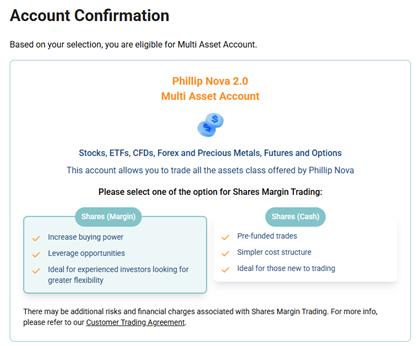
If you have an existing Nova trading account, you may opt-in for Shares Margin Trading on the Client Portal. If you have an existing MT5 trading account with Phillip Nova, you will need to apply for a Nova trading account for Shares Margin Trading.
If you have an existing Nova trading account, follow these steps to opt-in for Shares Margin Trading on Client Portal:
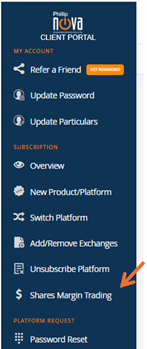
First, click on 股票保证金交易 in the right panel under Subscription.
Next, read and acknowledge the Risk Disclosure Statement and select Continue.
When your request meets the criteria for immediate approval, it will be approved on the immediately. You will see a banner displaying the time and date of your opt-in, and an email confirmation will be sent to you.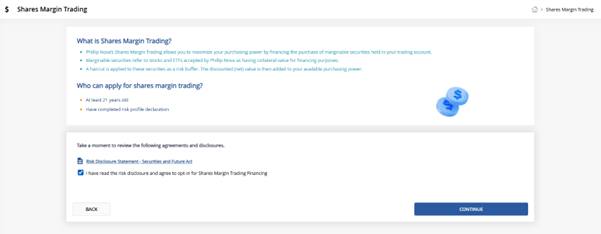
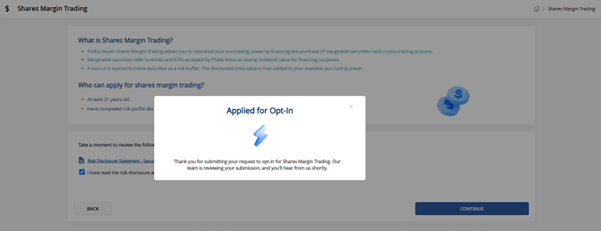
If your request doesn’t qualify for immediate approval, it will be reviewed internally. The banner will show that your request is under review, and you will receive an email confirming this status.
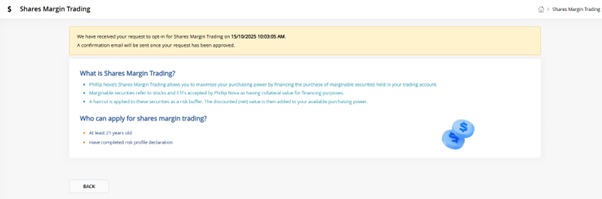
After the review, if your request is approved, you will see a banner displaying the time and date of your opt-in, and an email confirmation will be sent to you.
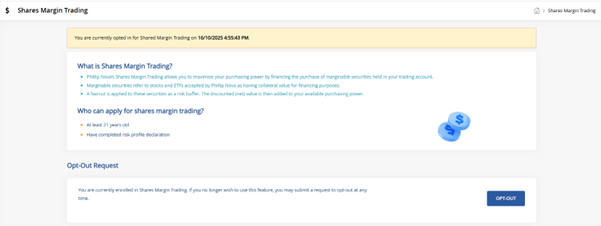
If your request is not approved after review, the banner will show no status, and you will receive an email notification of the decline
Margin-eligible securities can be identified with these icons on the Watchlist and the Order Ticket:
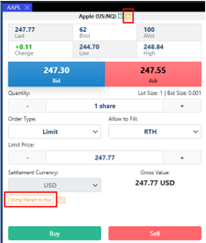
或者,您可以参考可供保证金交易的证券清单。 此处.
不,无需向菲利普·诺瓦追加抵押证券。
一旦您的账户获得股票保证金交易批准,您交易账户中由 Phillip Nova 托管的任何可保证金证券将自动被认定为抵押品,以支持额外的股票购买。
是的,可以。您的保证金证券价值将按现行汇率转换为交易货币,以确定您的购买力。
但是,如果您购买的证券是以您不持有的货币计价的,就会造成货币赤字。为避免支付利息,请确保您持有足够的该货币权益余额。
您可以参考我们已公布的现行融资利率。 此处.
不,Phillip Nova 不会就使用 Phillip Nova 的保证金交易服务收取任何账户费或平台费。
只有当您的账户出现资金缺口时(即您的权益余额与初始保证金之和小于零),才会收取融资费用。费用按每种货币的缺口金额计算。
当您的权益余额以任何币种表示为负数时,即视为您已进行融资。出现负余额的原因可能是您的证券购买额超过可用账面余额,或衍生品交易中已实现或未实现的亏损、佣金或其他相关交易费用和融资费用。利息费用按权益余额减去初始保证金后的负数计算,并按日累积,直至偿还为止。
以下是一些示例场景:
| 设想 | 权益余额(新加坡元) | 初始保证金要求(新加坡元) | 应计利息金额 | 解释 |
|---|---|---|---|---|
| 1 | 1,000 | 2,000 | 1,000 | 您目前欠款1000新加坡元,此金额将产生利息。 |
| 2 | -2,000 | 0 | 2,000 | 您的资产净值为负,这意味着您欠款 2,000 新加坡元。这笔款项将产生利息。 |
| 3 | 2,000 | 1,000 | 没有任何 | 无需支付差额。不收取利息。 |
| 4 | 1,000 | 1,000 | 没有任何 | 权益资金足以满足保证金要求。不收取利息。 |
是的,我们的低净值和周末风险政策在所有账户类型中都是统一的。请参阅我们的保证金交易常见问题解答。 此处.
我们的追加保证金通知、低净值交易和周末风险政策在所有账户类型中均采用标准化流程。请参阅我们的保证金交易常见问题解答。 此处.
请查看我们的保证金交易常见问题解答 此处.
虽然将证券转移到 Phillip Nova 会增加您的抵押品基础,但这通常并不实际,因为我们的标准追加保证金政策通常要求在 2 天内结算。
我们建议您参阅我们的保证金交易常见问题解答。 此处 有关追加保证金方式的更多信息。
不,我们不提供与CPFIS-OA/SRS的交易服务。Phillip Nova仍将作为您通过我们购买的证券的资产托管人。
公司行为可能会影响您所持股份的抵押价值。Phillip Nova 将根据其内部政策和每项事件的具体情况调整融资资格、折价幅度以及抵押价值。
如果公司行为对您的持股价值或整体投资组合健康状况产生重大不利影响,您的账户可能会面临追缴保证金的风险,或者在严重的情况下,面临低净值清算的风险。
下表说明了某些类型的公司行为如何影响股票价格,进而影响您的投资组合价值。实际结果可能与所示示例有所不同。
风险等级 | 公司行动 | 对股票保证金交易的潜在影响 | 对股票价格的理论影响 | 为什么股票保证金交易存在风险 |
非常高 | 退市 | 抵押品价值完全移除 | 流动性下降的信号;通常在退市前大幅下跌。 | 价值急剧下降可能导致追加保证金或强制清算投资组合。 |
非常高 | 交易暂停 | 抵押品价值可能完全被移除。 | 价格冻结;若恢复交易,则有大幅下跌的风险。 | 无法出售;移除抵押品价值可能导致追加保证金或强制清算投资组合。 |
高 | 并购(目标公司) | 抵押品价值在交易期间可能会出现大幅波动,如果交易失败,股价可能会暴跌。 如果收购的股份不符合抵押品资格,抵押品价值就会下降。 | 价格通常在公告发布后上涨,并向要约价格靠拢;交易期间价格可能保持波动。 | 在市场波动剧烈时期,抵押品减值幅度可能会增加。市场波动可能触发追加保证金通知,股价下跌可能导致您的投资组合被迫清算。 如果合并或收购产生的新股不符合抵押品的条件,融资渠道也可能突然减少,这反过来可能导致追加保证金或强制清算。 |
高 | 并购(收购方公司) | 抵押品价值通常会在公告发布后下降。 | 由于股权稀释和交易风险,股价通常会在公告发布后下跌。 | 抵押品价值下降可能会引发追缴保证金通知,持续波动或进一步下跌可能会导致追缴保证金通知或强制平仓。 |
高 | 配股(可放弃或不可放弃) | 价格在除息日跌至TERP,导致抵押品价值下降。 行使权利需要现金支出。 认股权只有转换为已缴足股款的股份后才有资格获得保证金。 | 除权日当天,股价可能会跌至TERP。 | 可能导致抵押品价值大幅下降,进而引发追加保证金;如果情况严重,甚至可能导致投资组合被迫清算。 |
中等的 | 特别股息(现金) | 抵押品价值在除息日下降,而现金只有在支付日或之后才能记入账簿,导致融资覆盖暂时中断。 | 按股息金额递减;特别股息可能远高于常规股息。 | 除息日不发放股息。 抵押品价值下降会降低购买力,并可能引发追加保证金通知;如果情况严重,则可能导致投资组合被迫清算。 |
中等的 | 特别股息(股份) | 抵押品价值在除息日下降,除息抵押品价值将取决于新股的资格。 以不同柜台发行的新股可能不符合抵押品资格,或者只能在支付日之后才能记入账户,从而导致融资覆盖率暂时中断。 | 母公司股价相应下跌。 | 失去分拆股份资格可能会减少融资。 抵押品价值下降会降低购买力,并可能引发追加保证金通知;如果情况严重,则可能导致投资组合被迫清算。 |
中等的 | 资本缩减 | 抵押品价值在除息日下降,而现金只有在支付日或之后才能记入账簿,导致融资覆盖暂时中断。 | 价格下跌幅度可能超过收回的资本,尤其是在降价与重组或不利的财务状况有关的情况下。 | 除息日当天不计入资本收益。抵押品价值下降会降低购买力,并可能触发追加保证金通知;如果情况严重,则可能导致投资组合被强制清算。 |
低的 | 股票股息/红股发行 | 抵押品价值在除息日下降,而新股只有在支付日或之后才能记入股本,导致融资覆盖率暂时出现缺口。 | 价格按比例下降;总价值不变。 | 如果该股票仍符合保证金交易条件,则风险极低。 抵押品价值下降会降低购买力,并可能引发追加保证金通知;如果情况严重,则可能导致投资组合被迫清算。 |
低的 | 股份拆分/反向拆分 | 抵押品价值不变;仅数量和价格调整。 | 价格随分成比例成比例变化。 | 如果交易仍然符合资格,则风险极小。 |
低的 | 现金股息 | 抵押品价值在除息日下降,而现金只有在支付日或之后才能记入账簿,导致融资覆盖暂时中断。 | 价格下跌幅度通常较小,下跌金额为股息金额。 | 除非收益率异常高,否则风险极小。 |
*TERP = 理论除权价格
指标 | 简介 |
现金 B/F | 提前支取的现金 |
调整 | 资金存入或提取 |
净佣金/商品及服务税 | 净佣金,如适用,含消费税。 |
已实现损益 | 期货、期权和场外交易的已实现盈亏 |
高级选项 | 已支付或已收取的期权费 |
股票购买 | 已购证券总价值 |
股票收益 | 已结算的股票收益 |
现金流 | 结转现金 |
远期价值 | 期货、期权和场外交易的远期已实现盈亏 |
未实现损益 | 期货、期权和场外交易持仓的浮动盈亏 |
权益余额 | 权益余额代表您账户在扣除所有已实现和未实现活动后的总价值。 |
抵押品:银行担保/现金 | 现金等价物抵押品,包括银行担保 |
抵押合格证券(净额) | 符合条件的抵押品,可计入保证金超额和证券可用权益。 |
Collateral Marginable Securities (Net) | Eligible collateral that counts toward Available Equity for Securities |
Outstanding Stock Proceeds | Value of stocks sold that have not been settled |
Margin Stock Credit | Purchased value of stocks that count toward Margin Excess / Deficit |
初始保证金 | Initial margin arising from open positions in Futures, Options, and OTCD |
Main. Margin | Maintenance margin arising from open positions in Futures, Options, and OTCD |
Excess Control Curr | Value of excess controlled currencies. This amount will be deducted from Margin Excess / Deficit, Available Equity for Securities and Allowable Withdrawal. |
Margin Excess / Deficit | Excess funds to support trading of Futures, Options and OTCD. A negative value indicates a shortfall.
Margin calls are based on this value, but the daily Margin Excess / Deficit value does not directly equal the margin call amount for that day. Margin calls are determined on a cumulative basis. |
Available Equity for Securities | Excess funds to support trading of Securities |
Allowable Withdrawal | Available funds that can be withdrawn. This excludes outstanding stock proceeds and excess controlled currencies |
Net Option Value | Combined mark-to-market value of all open option positions |
Stocks Market Value | Total market value of all your securities holdings, based on the closing prices of each security. |