CN
CN  EN
EN 

Earnings season can quickly bring some of the world’s most closely watched companies into focus.
Companies such as Apple, Microsoft, Alphabet, Amazon, Meta, Nvidia and Tesla can attract considerable market attention during earnings season. Their results may influence not only their own share prices, but also the wider technology sector and major US indices.
Many companies release earnings outside regular market hours. By the time the next session opens, the first major price move may already have happened. With pre-market access to selected US shares CFD on Phillip MT5, traders can monitor these early reactions and manage positions before regular US trading begins.
Earnings season can create trading opportunities, but it can also bring sharp price gaps, wider spreads and sudden reversals. Understanding when companies report, what the market expects and how earnings-related volatility may affect a position is therefore an important part of preparation.
What Is Earnings Season?
Earnings season is the period when many publicly listed companies release their latest financial results.
Many publicly listed US companies report financial results quarterly, although reporting schedules and financial year-ends may vary. Many announcements are concentrated within a few busy weeks 和 these reports typically include revenue, profit, earnings per share, profit margins, management guidance and updates on key parts of the business.
Investors use this information to reassess a company’s financial health, growth prospects and valuation. For traders, earnings reports matter because new information can quickly change market expectations and move share prices.
Why Do Share Prices Move During Earnings Season?
Share prices move during earnings season because traders and investors compare a company’s reported results and outlook with what the market expected.
Before results are released, investors already have expectations based on analyst forecasts, previous guidance and recent business trends. These expectations are often reflected in the share price. As a result, the market usually reacts to whether the results are better or worse than expected.
The signals can also be mixed. A company may report higher profits but weaker sales or deliver solid results while warning of slower growth ahead. In these cases, investors tend to focus on the information they believe matters most, such as future guidance, demand for a key product or performance in an important business segment.
This is why earnings reactions can be sharp and sometimes surprising. The market is not just judging the latest quarter. It is reassessing what the company may be worth based on the new information available.
How Can Traders Use an Earnings Calendar?
The first step is to check when each company is due to report.
An earnings calendar shows the reporting date and whether results are expected before the market opens or after it closes. This matters because a share may begin moving before the next regular session starts.
Platforms such as Investing.com, Yahoo Finance and Trading Economics allow users to filter earnings calendars by date, market, sector or company. These calendars also display forecast earnings per share, expected revenue and reporting time, helping traders compare the actual figures with market expectations once results are released.
An earnings calendar can therefore help traders build a focused watchlist, identify important announcements and prepare for possible pre-market price moves.
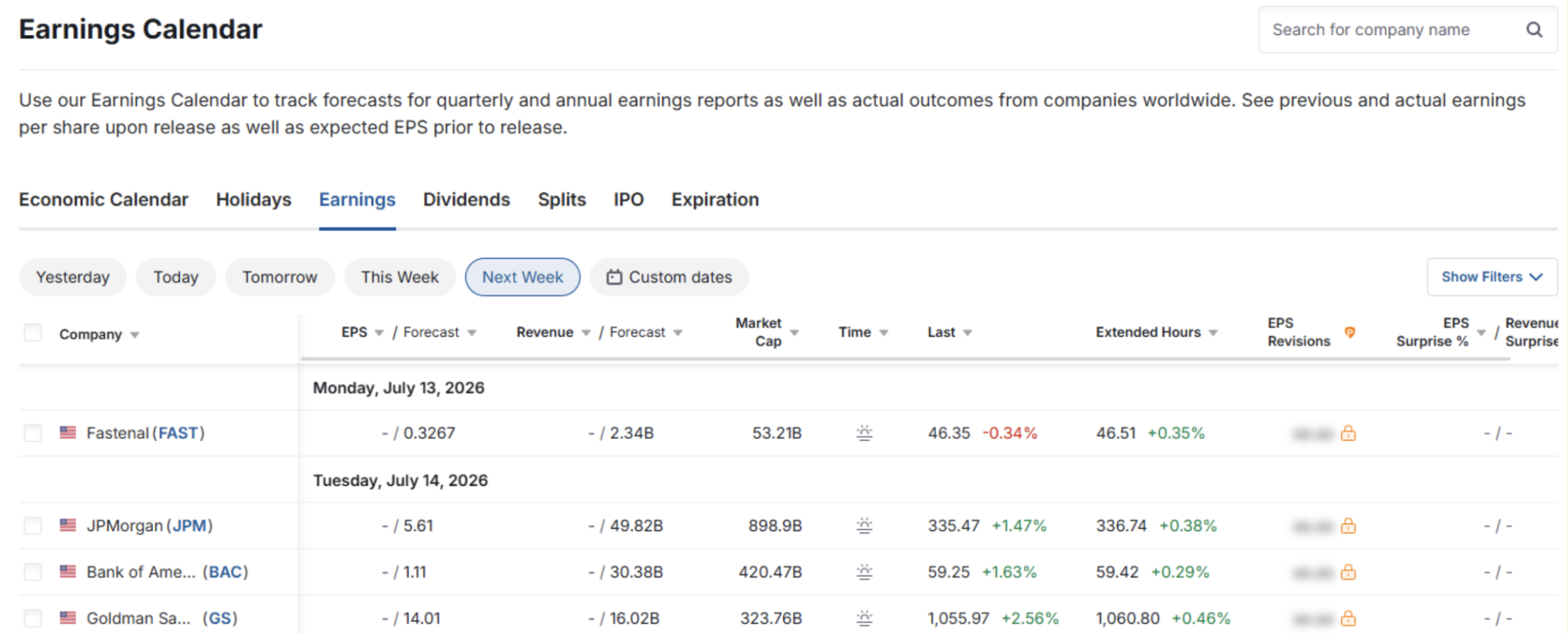
来源: https://www.investing.com/earnings-calendar
What Happens When Companies Report Outside Regular US Trading Hours?
When a company reports outside regular US trading hours, the first major price reaction may happen before the next session starts.
Phillip MT5 gives traders pre-market access to selected popular US shares CFD, marked with “-PM”, e.g., AAPL-PM for Apple. This allows traders to monitor price action, adjust existing positions and assess whether earnings-driven momentum is strong before regular trading begins.
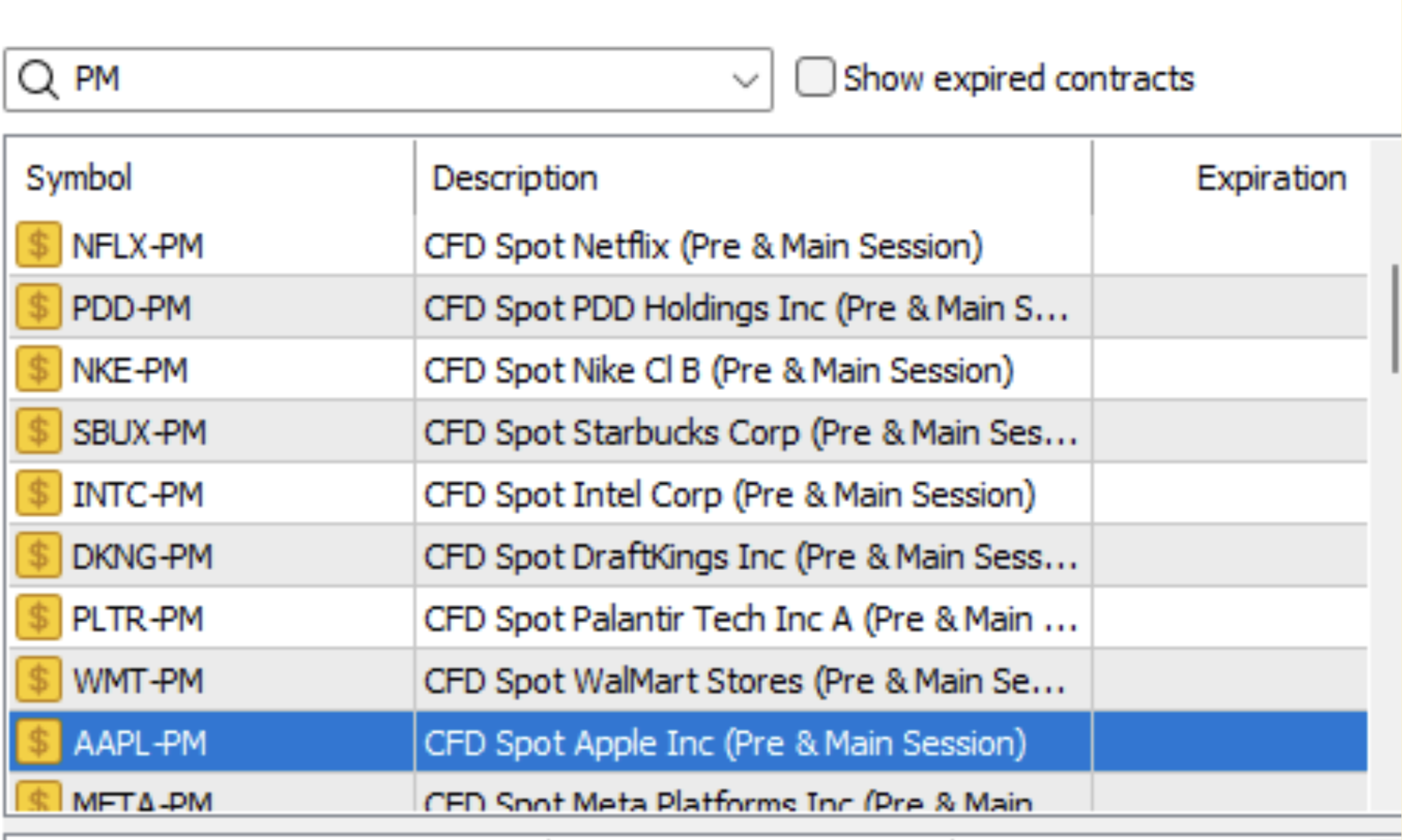
Source: Phillip MetaTrader 5
This added flexibility can be especially useful after an overnight earnings surprise or ahead of a company due to report before the market opens. Pre-market trading may involve lower liquidity, wider spreads and sharper price swings, so position size and risk controls remain important.
Learn more in our introductory article to pre-market US Shares CFD trading.
How Should Traders Prepare for Earnings When Trading Share CFDs?
Once the reporting date and time are confirmed, the next step is to decide whether the event fits your trading plan.
Start with the company itself. Review its recent results, previous guidance and any major developments since the last report. Analyst forecasts for revenue and earnings per share can provide useful context, but traders should also identify the areas the market is watching most closely, such as AI spending for a technology company or margins and consumer demand for a retailer.
Recent price action matters too. A share that has already risen sharply may be carrying high expectations, while one that has fallen may already reflect a weaker outlook. Reviewing the trend, key price levels, sector performance and recent results from similar companies can help place the upcoming announcement in context.
Phillip MT5 also provides access to custom indicators and third-party resources from Acuity and Trading Central. These resources may help users review price trends, market sentiment and possible scenarios alongside an earnings calendar.
Indicators, signals and third-party analysis should be treated as research inputs rather than trading recommendations. They do not guarantee that a particular market scenario will occur.
What Are the Common Approaches to Trading Around Earnings?
After completing their research, traders still need to decide when or whether to take a position. Three common approaches are trading before the event, managing an existing position ahead of the event and waiting for the post-event reaction.
Trading Before the Results
Some traders prepare before an earnings announcement to capture the first major price move. Because the direction is uncertain, one possible approach is to place a buy-stop order above the recent trading range and a sell-stop order below it. If the price breaks in either direction, the relevant order is triggered, while the unused order should be cancelled.
Johnson & Johnson’s July 2026 results illustrate how an initial earnings reaction can subsequently reverse. The company beat headline earnings and revenue expectations, but weaker performance in its MedTech business contributed to a mixed market reaction.
As the Phillip MT5 chart shows, the JNJ-PM CFD rose sharply after the release at 15:30 MT5 server time, equivalent to 8:30 p.m. Singapore time. The rally then faded during regular trading hours as investors digested the weaker MedTech results, and the share price subsequently moved lower.
This example also shows that a triggered buy-stop order does not remove reversal risk. A trailing-stop order may assist with risk management, but it may be executed at a different price during a fast-moving or illiquid market.
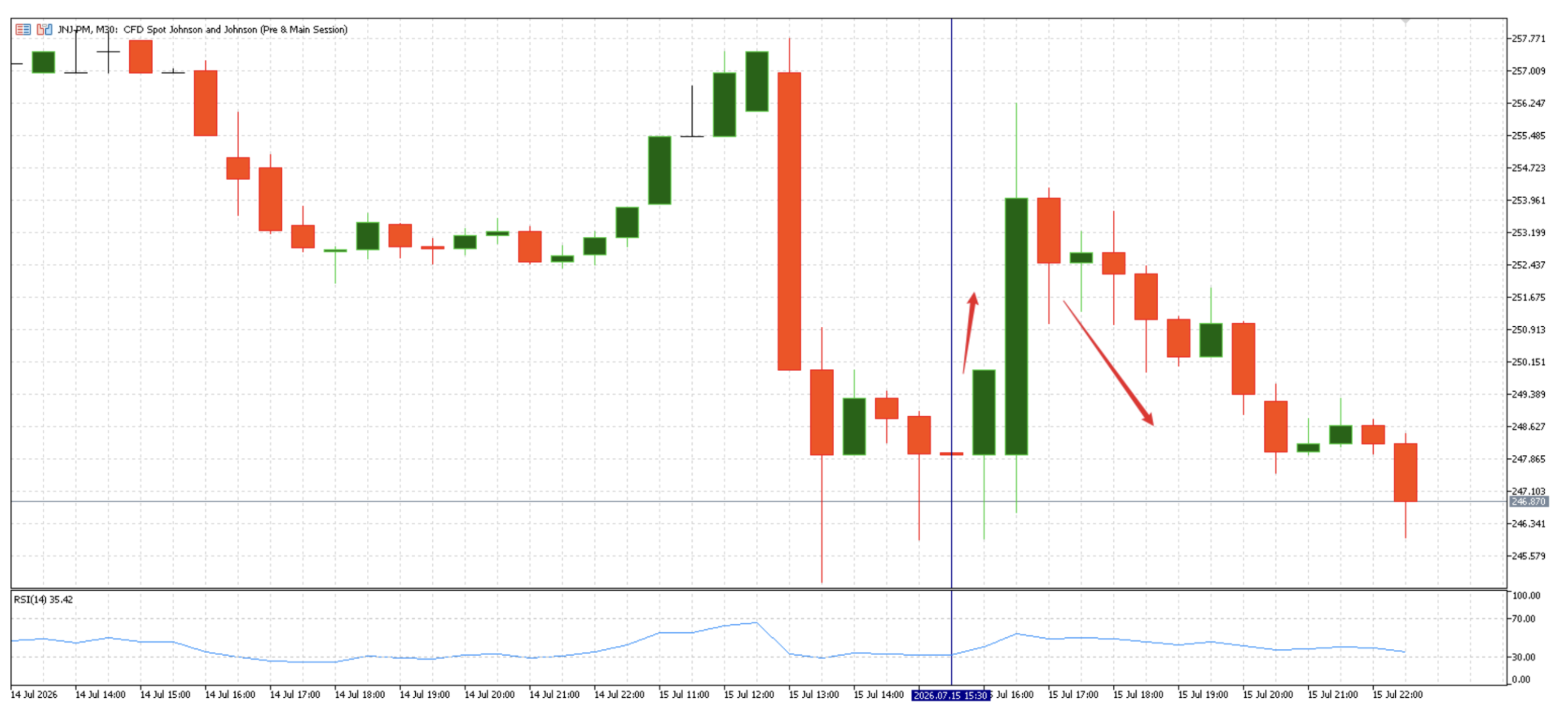
Source: Phillip MetaTrader 5
Managing an Existing Shares CFD Position
Traders who already hold a shares CFD should decide before earnings whether to keep the position open, reduce it or close it. The choice depends on the size and direction of the trade, as well as how much volatility they are prepared to accept.
Alphabet’s first-quarter 2026 results provide a useful example. The company reported after the US market closed on 29 April, beating revenue expectations as Google Cloud delivered strong growth. Alphabet shares then moved higher before the regular session opened on 30 April, affecting existing long and short GOOG-PM CFD positions differently.
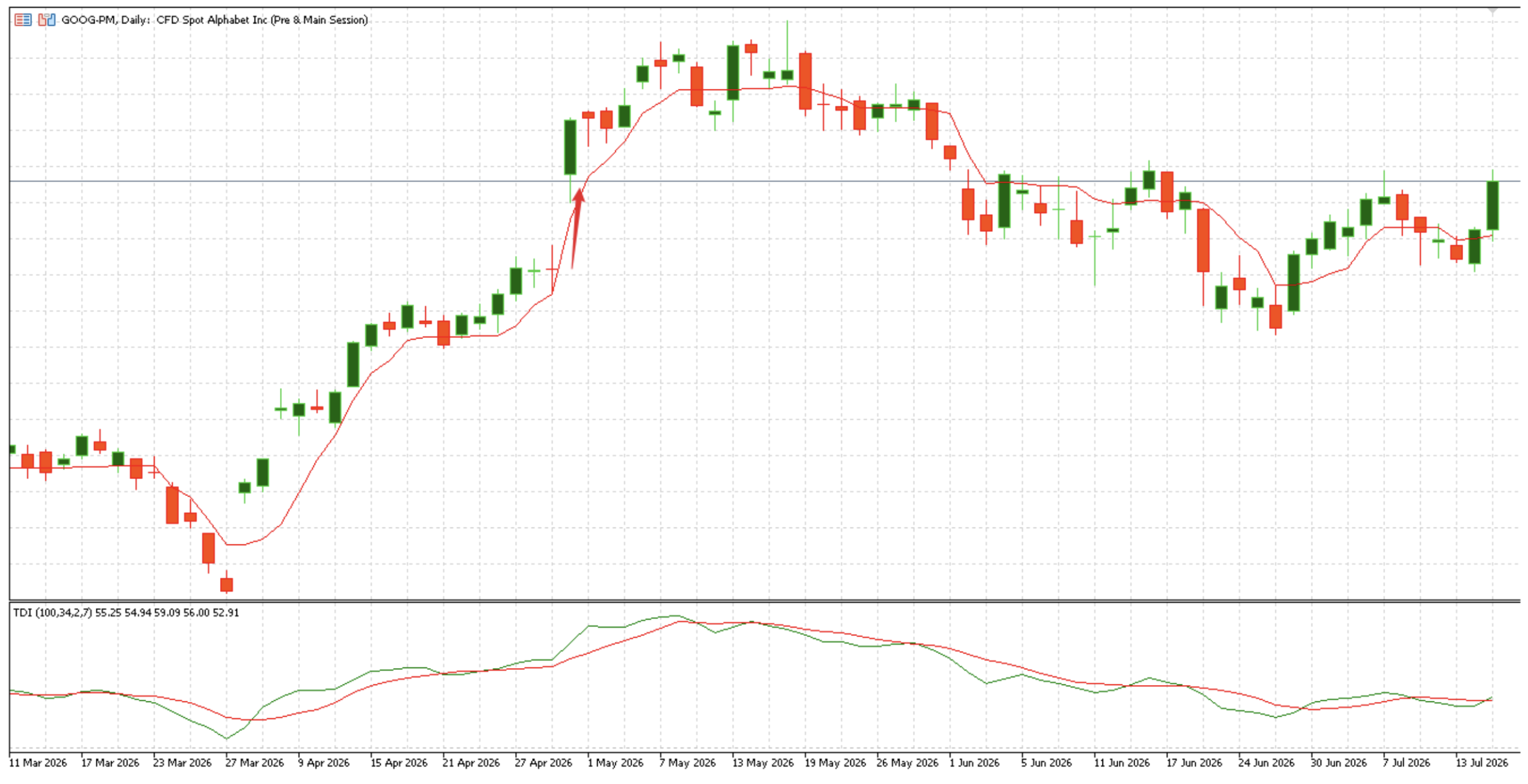
Source: Phillip MetaTrader 5
A trader in this situation could keep the original position open and use a stop-loss or trailing stop to protect part of the gain. With pre-market access on Phillip MT5, they could also monitor whether the higher price and buying momentum were holding before regular trading began and whether to add a separate position if the trend continued.
Analysing the Post-Earnings Reaction
Some traders prefer to wait until after the announcement before opening a shares CFD position. This gives them time to compare the results with expectations and see whether the first price move is supported or challenged by later information and price action.
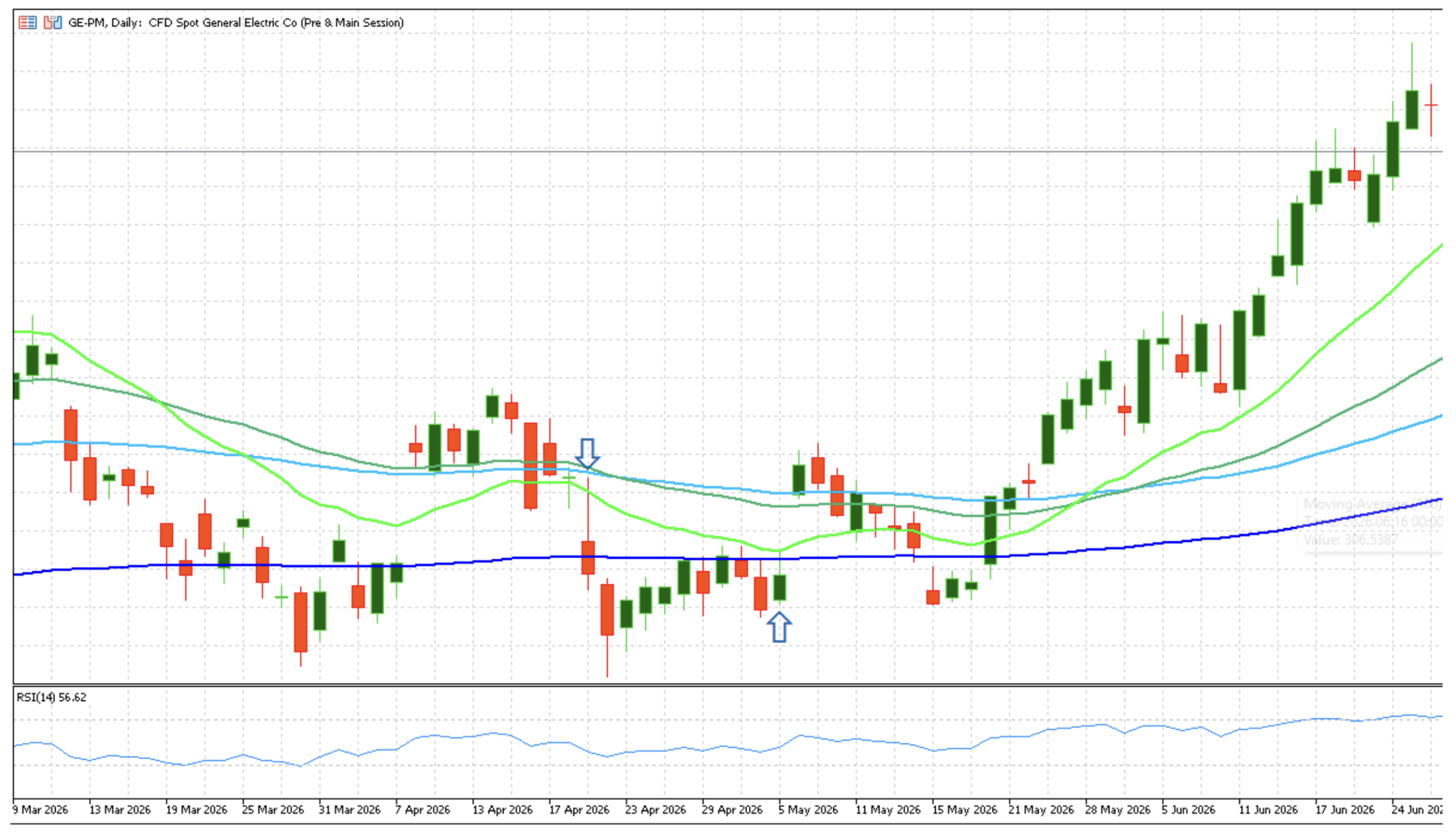
General Electronic’s first-quarter 2026 results show why this approach can be useful. The company reported strong growth in orders on 21 April, but its shares initially fell as investors focused on concerns such as higher fuel prices, slower flight growth and uncertainty among airline customers.
As the Phillip MT5 chart shows, GE’s share price remained under pressure after the earnings release before stabilising in early May. Momentum then improved from mid-May, followed by a sustained rise into June as contracts with Turkish Aerospace and the US Air Force in May supported the positive demand picture from the original report.
Source: Phillip MetaTrader 5
Rather than reacting immediately to the first move, a trader could wait for the price to stabilise and assess whether the sell-off appears overstretched or the rebound overextended. This may miss the earliest part of the move, but it provides more information and clearer price confirmation before a trade is considered.
How Can Traders Manage Risk When Trading Share CFDs Around Earnings?
Earnings announcements can trigger sharp gaps, wider spreads and sudden reversals. Because share CFDs use leverage, even a relatively small move in the underlying share can have a much larger effect on trading capital.
A practical risk plan can focus on three actions.
Trade Smaller and Protect Margin Before Earnings Release
Decide the maximum amount you are prepared to lose before opening the trade.
Because earnings can produce larger-than-normal price swings, consider using a smaller position than usual. This limits the effect of a sudden adverse move and leaves more available margin in the account.
Plan Entry and Exit Rules in Advance
For a trade placed before the earnings release, define the entry level, stop-loss and profit-taking rules in advance so you are prepared for a sudden move in either direction.
For a trade considered after the release, consider whether it is appropriate to wait for the initial price movement to stabilise before defining possible entry and exit levels. Wait for the market to stabilise, then set entry and exit levels based on developing price action.
Stop-loss and trailing-stop orders can help manage risk, but gaps and lower liquidity may result in execution at a different price. If both buy-stop and sell-stop orders are placed before an earnings release, cancel the unused order once one side is triggered to avoid opening a second position in the opposite direction.
Prepare for Different Outcomes
Do not assume that strong results will make a share rise or weak results will make it fall. A company can beat expectations and still decline, or miss forecasts and still move higher.
Before trading, consider several possible outcomes. The price may continue strongly in one direction, reverse after the first move or barely move at all.
If trading in the pre-market session, also allow for wider spreads and lower liquidity when setting entry levels and stop distances.
The aim is not to predict the result with certainty, but to prepare for several possible outcomes rather than relying on a single directional assumption.
How Can Traders Prepare for Earnings Season?
Earnings season can trigger major price moves before regular US trading begins. The key is to know when companies are reporting, understand what the market expects and prepare for different outcomes before and after each release.
Phillip MT5 provides access to selected US Shares CFD during the pre-market session, allowing traders to monitor early price action and review existing positions before regular US trading begins. Risk-management tools such as stop-loss and trailing-stop orders may assist with position management, but they do not eliminate market or execution risk.
Open a free Phillip MetaTrader 5 demo account to explore pre-market US shares CFD, track upcoming earnings with the earnings calendar and practise planning trades before considering live trading. When you are ready to move beyond the demo environment, you may open a Phillip MetaTrader 5 live account and complete the relevant onboarding requirements.
关于作者
陈昱睿 Chen Yurui
辉立Nova外汇业务拓展
陈昱睿毕业于新加坡国立大学(National University of Singapore),主修金融,目前为CFA三级候选人。他拥有金融市场分析及场外衍生品相关经验,主要关注外汇、贵金属、差价合约(CFDs)及宏观经济前景。
在工作中,他也积累了算法交易及交易系统方面的实践经验,包括在MetaTrader 5上开发、回测及优化智能交易系统(Expert Advisors,EAs)。他希望通过相关内容,让金融市场及交易概念变得更实用、更容易理解。