CN
 EN

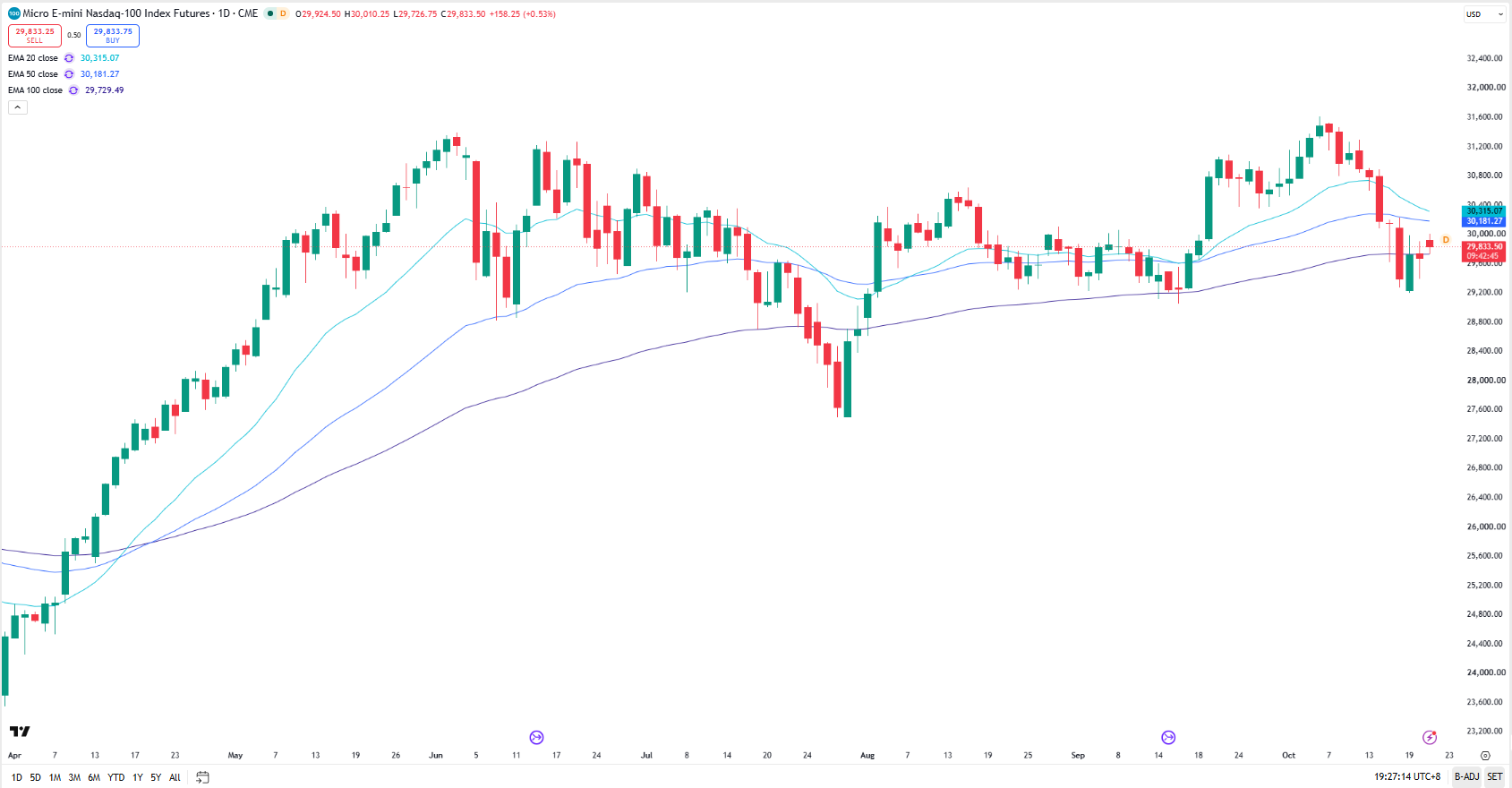
US technology stocks are showing signs of recovery after a sharp selloff, but rising borrowing costs and questions surrounding AI investments could test the rally’s staying power.
关键要点
-
Semiconductor stocks lead the recovery: The Philadelphia Semiconductor Index gained 1.6%, ending an eight-session losing streak.
-
AI investment remains under scrutiny: Investors are increasingly focused on whether corporate earnings can justify elevated technology valuations and substantial AI infrastructure spending.
-
Interest rates remain a headwind: Rising US Treasury yields and elevated oil prices could continue to influence market sentiment.
Semiconductor Stocks Spark a Wall Street Rebound
US equity futures edged higher in early trading on 20 October as a recovery in semiconductor stocks helped restore some confidence following a difficult week for technology shares.
Nasdaq 100 futures advanced 0.2% after the underlying index climbed 1.2% in the previous session. The Philadelphia Semiconductor Index rose 1.6%, breaking an eight-session losing streak, while S&P 500 futures gained 0.1%.
The rebound followed a period of heightened volatility driven by concerns over the scale of AI infrastructure investments, elevated technology valuations and rising interest rates.
However, the recovery was less convincing across Asian markets, where futures pointed to a weaker opening in several major markets.
AI Boom Faces a Critical Earnings Test
The sustainability of the technology rebound could depend heavily on upcoming corporate earnings.
Investors are looking to major technology companies, including Meta Platforms and Tesla, for evidence that earnings growth can support the substantial capital being committed to AI development.
Reports that computing infrastructure provider Nscale was discussing a potential US$45 billion deal with Anthropic further highlighted the enormous scale of investment flowing into AI.
Yet concerns remain over whether these investments can generate sufficient returns, particularly as financing costs rise.
AI infrastructure provider CoreWeave has also attracted attention following recent pressure on its debt and share price, underscoring growing investor sensitivity to the financial risks associated with rapid expansion.
Rising Bond Yields Add to Market Uncertainty
Beyond the technology sector, higher US Treasury yields continue to present challenges for equity markets.
The benchmark 10-year Treasury yield rose to approximately 5.14% on 19 October as recovering risk appetite reduced demand for government bonds and investors reassessed expectations for future Federal Reserve interest-rate increases.
Higher yields can increase financing costs for businesses and place additional pressure on the valuations of growth-oriented companies.
Meanwhile, Brent crude remained above US$109 per barrel amid concerns over potential supply disruptions linked to Middle East tensions.
Persistently elevated energy prices could complicate the inflation outlook and reinforce expectations that interest rates may remain higher for longer.
What’s Next for Wall Street?
While the semiconductor-led rebound has provided some relief to investors, several developments could determine whether the recovery gathers momentum.
Corporate earnings: Strong results and encouraging guidance from major technology companies could help restore confidence in the AI investment cycle.
AI spending and profitability: Investors will be watching whether demand for computing infrastructure translates into sustainable earnings and cash flows.
Interest rates and oil prices: Rising bond yields and persistent energy-driven inflation could weigh on valuations and broader market sentiment.
Market breadth: A recovery extending beyond a handful of semiconductor and AI-related stocks could provide a stronger indication of improving investor confidence.
Ultimately, the rebound suggests that investor appetite for technology stocks has not disappeared. However, with valuations under scrutiny and financing costs elevated, the next phase of the rally may depend increasingly on earnings performance rather than AI enthusiasm alone.
The key question: Can strong corporate results turn the latest rebound into a sustainable recovery, or will macroeconomic pressures trigger another round of volatility?
Take a view now
Trade CME E-nano Index Futures at just $0.50* on NOVA, or monitor prices on related commodities, precious metals, ETFs, CFDs and Stocks now. Learn more here.
Open an account to get started here.
在 NOVA 交易 CFDs、ETF、外汇、期货、期权、贵金属和股票
NOVA 交易功能
- 接通超过 20 个全球交易所 通过超过 20 个全球交易所的 200 多个环球期货产品,把握市场机会。
- 全球股票交易机会 覆盖新加坡、美国、中国、香港、马来西亚及日本市场超过 11,000 只股票和 ETF。
- TradingView 图表支持 查看实时图表,并使用超过 100 种技术指标。
- 真正的多资产交易 通过 NOVA 的单一账簿,交易 CFDs、ETF、外汇、期货、期权、贵金属及股票。
- 美元及新元股票融资利率低至 4.5% p.a.
- 美股碎股低至 1 美元起
以低至 1 美元名义金额开始投资美股碎股,每笔订单佣金为 0.38 美元。