CN
CN  EN
EN 
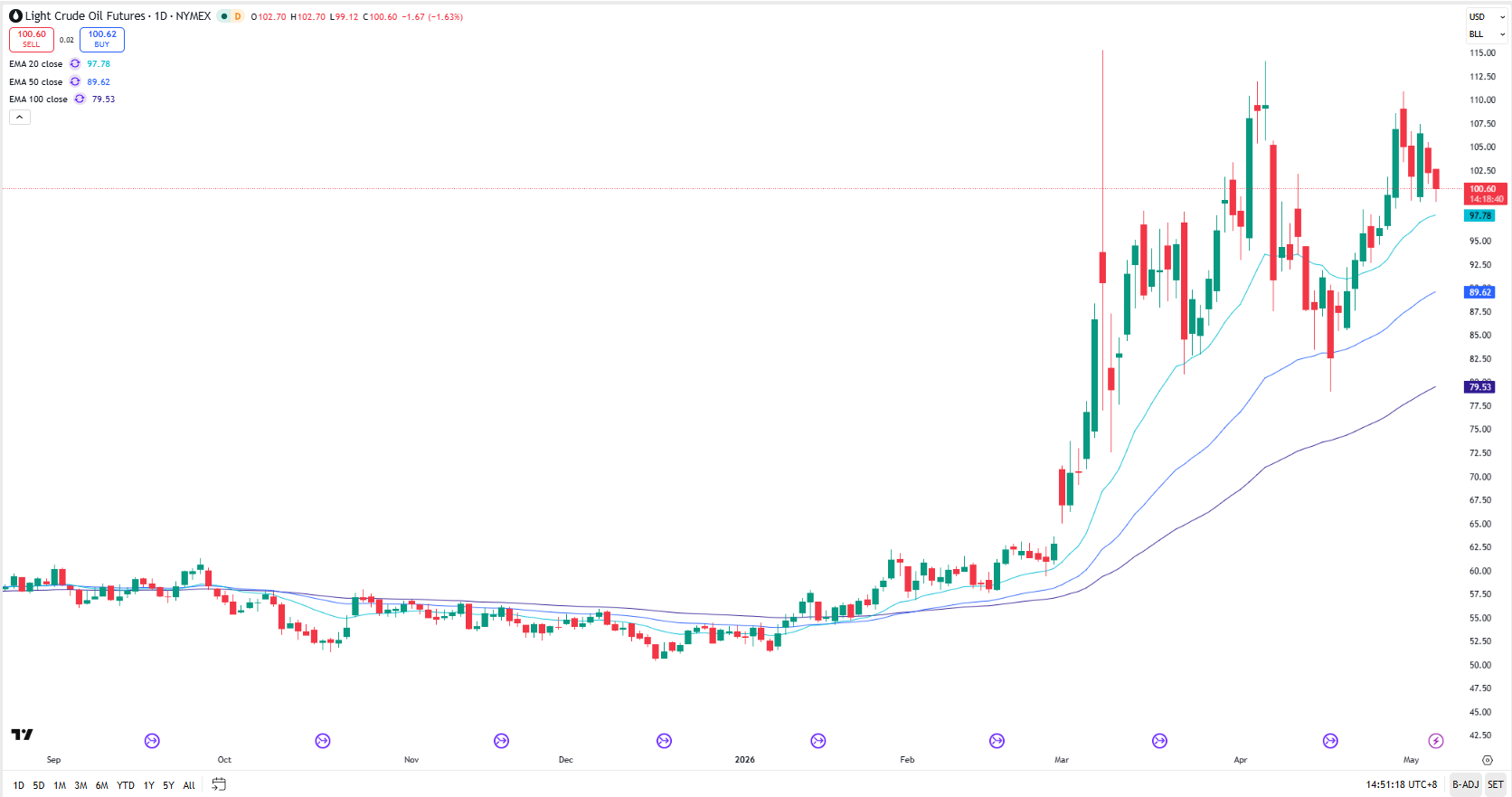
Oil prices traded slightly lower in early sessions, giving back part of this week’s sharp gains as markets responded to signs that the fragile US-Iran ceasefire is holding — at least for now — while diplomatic efforts continue to gain traction.
Recent headlines surrounding Donald Trump pausing the Hormuz escort operation and signalling progress toward a potential deal helped ease immediate supply concerns, triggering a wave of profit-taking across crude markets.
Both WTI and Brent have largely entered a short-term consolidation phase after the recent surge. However, the pullback should not be mistaken for stability.
As of 10:25 am Singapore Standard Time, WTI futures traded at $100.57 per barrel, down -1.65%, while Brent futures slipped -1.63% to $108.05 per barrel.
Despite the temporary easing in tensions, the ceasefire remains fragile. Sporadic attacks, deep mistrust between both sides, and continued military presence in the region continue to keep markets on edge. Traders are still pricing in a meaningful geopolitical risk premium, given that any breakdown in negotiations could once again threaten flows through the Strait of Hormuz — a critical route responsible for roughly 20% of global oil supply.
At the moment, oil markets remain caught between diplomacy and disruption.
Crude prices fell nearly 4% after confirmation that the ceasefire was holding, but prices continue to remain firmly above the $100 level — highlighting how tight underlying supply conditions still are. While headlines are beginning to point toward de-escalation, markets remain unconvinced that a lasting resolution has been achieved.
Until oil flows through Hormuz normalise sustainably, any downside in crude is likely to remain limited and short-lived.
For now, hope is driving the near-term pullback, but fear continues to anchor prices higher.
Although a correction after the recent rally is justified — especially with optimism surrounding renewed negotiations — the broader supply issue remains unresolved. Even if partial reopening or escorted shipments resume, full normalisation of production and logistics could still take months, according to analysts monitoring the region.
关键要点
- The ceasefire may be holding, but oil markets are signalling lingering distrust
Prices remain elevated despite easing tensions, reflecting persistent geopolitical risk premiums. - Markets are experiencing relief — not resolution
Diplomatic headlines may calm volatility temporarily, but supply risks remain unresolved. - As long as Hormuz flows remain uncertain, $100 oil could act as support rather than resistance
Underlying supply tightness continues to limit downside pressure. - The market is trading headlines, but the risk premium refuses to disappear
Peace talks are encouraging profit-taking, yet traders remain cautious about a sudden escalation.
Navigate the Crude Oil and Gold Futures market on NOVA, or monitor prices on related ETFs, CFDs and stocks now. 立即开立账户.
在 NOVA 交易 CFDs、ETF、外汇、期货、期权、贵金属和股票
NOVA 交易功能
- 接通超过 20 个全球交易所 通过超过 20 个全球交易所的 200 多个环球期货产品,把握市场机会。
- 全球股票交易机会 覆盖新加坡、美国、中国、香港、马来西亚及日本市场超过 11,000 只股票和 ETF。
- TradingView 图表支持 查看实时图表,并使用超过 100 种技术指标。
- 真正的多资产交易 通过 NOVA 的单一账簿,交易 CFDs、ETF、外汇、期货、期权、贵金属及股票。
- 美元及新元股票融资利率低至 4.5% p.a.
- 美股碎股低至 1 美元起
以低至 1 美元名义金额开始投资美股碎股,每笔订单佣金为 0.38 美元。