CN
CN  EN
EN 
Gold is traditionally seen as the go-to safe-haven asset during periods of geopolitical uncertainty. Yet, in a surprising turn, gold prices have been falling even as tensions in the Middle East intensify.
At first glance, this may seem counterintuitive. However, a closer look shows that broader macroeconomic forces are currently outweighing gold’s usual safe-haven appeal.
It is also worth noting that gold had already rallied strongly earlier in 2026, reaching near-record highs before the latest geopolitical tensions escalated. This positioning plays an important role in understanding the recent pullback.
Interest Rates Are Taking Centre Stage
The biggest pressure on gold right now comes from interest rates.
Recent developments in the Middle East have pushed oil prices higher, raising concerns that inflation could remain elevated for longer. In response, markets are adjusting to expectations of fewer rate cuts anticipated and a growing belief that interest rates may stay higher for longer.
In simple terms, when interest rates rise, investors can earn better returns from assets like bonds or cash. Since gold does not generate income, it becomes relatively less attractive in comparison.
A Stronger US Dollar Is Dampening Demand
At the same time, the US dollar has been strengthening. Because gold is priced in US dollars globally, a stronger dollar makes gold more expensive for buyers using other currencies. This reduces demand and puts downward pressure on prices.
As a result, some investors have leaned toward holding cash or dollar-denominated assets instead of gold during this period.
Oil and Inflation Are Shaping Market Focus
Another key factor is the surge in oil prices. Supply concerns linked to the Middle East, particularly around critical transport routes, have heightened inflation worries. This has shifted market attention toward the economic impact of rising energy costs, rather than purely the uncertainty itself.
In other words, markets are reacting more to the inflationary consequences of geopolitical tensions than to the tensions alone.
Profit-Taking After a Strong Run
Gold’s earlier rally also helps explain the recent decline. After reaching elevated levels, the latest geopolitical developments did not trigger a sustained breakout. Instead, some investors took the opportunity to lock in gains, contributing to downward pressure on prices.
This reflects a common market dynamic where prior positioning influences how prices react to new developments.
Short-Term Positioning Is Driving Volatility
In periods of uncertainty, liquidity becomes a priority. Rather than moving heavily into gold, some investors have shifted toward cash and short-term instruments. This reflects a more cautious and flexible approach, where maintaining liquidity takes precedence over traditional hedging. As a result, gold’s reaction has been more muted, and even negative, in the short term.
Stocks & ETFs in Focus
Against this backdrop, market participants have been watching a mix of gold-related and energy-linked assets:
- Newmont Corporation (NYSE: NEM)
One of the world’s largest gold producers, often reflecting movements in gold prices while also being influenced by rising operational costs such as energy. - Barrick Gold (NYSE: B)
A major global miner with diversified operations, providing exposure to both gold price trends and broader commodity cycles. - SPDR Gold Shares (AMEX: GLD / SGX: GSD)
Tracks the price of physical gold and is widely used as a benchmark for gold performance in financial markets. - Energy Select Sector SPDR Fund (AMEX: XLE)
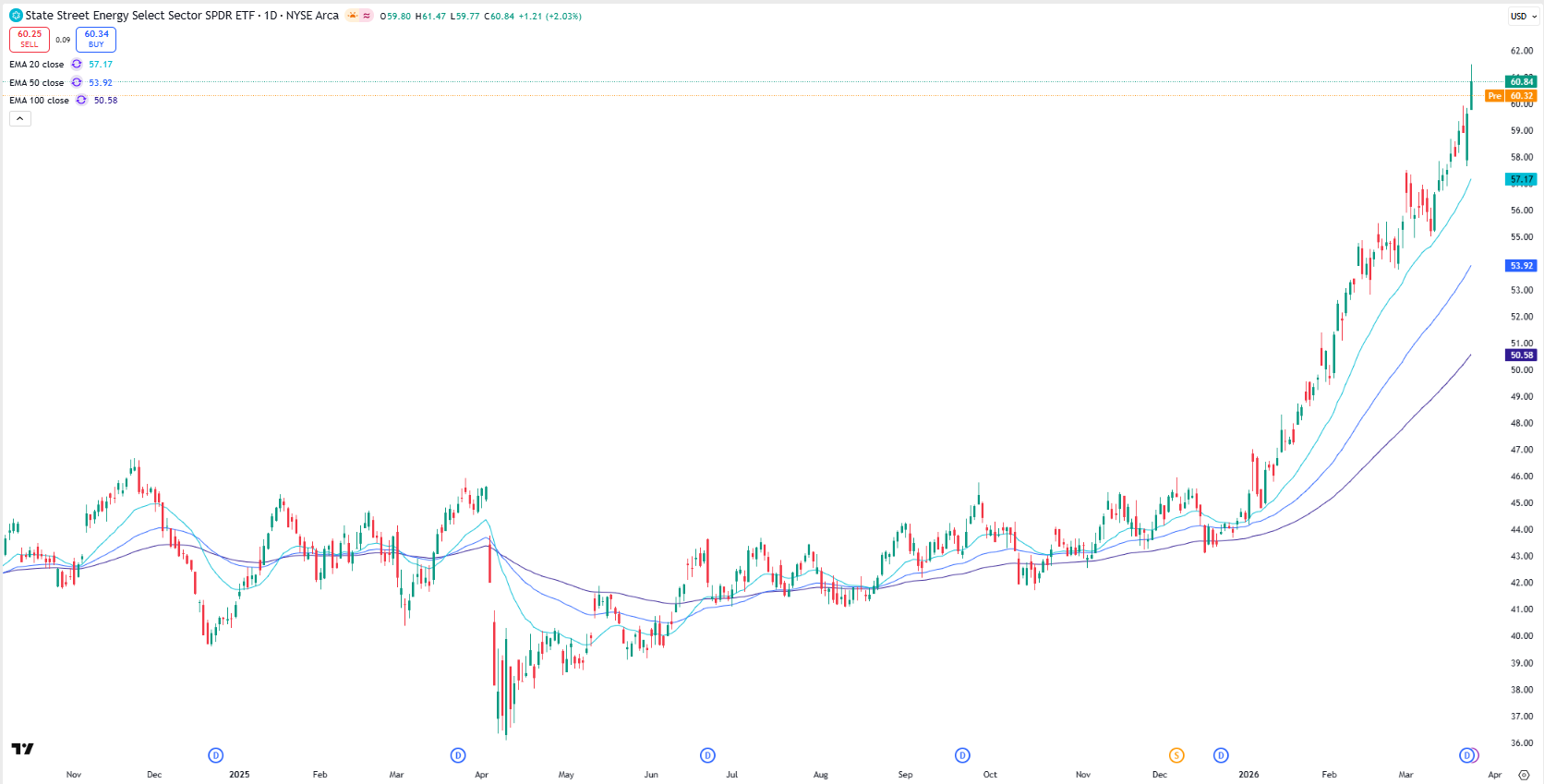
Offers exposure to large US energy companies, which have been in focus amid rising oil prices and supply concerns.
The Bigger Picture
Gold’s recent decline highlights an important reality: markets are rarely driven by a single factor. While geopolitical tensions would typically support gold, today’s environment is being shaped more by interest rates, currency strength, and inflation expectations. These forces can outweigh traditional relationships, at least in the short term.
For now, the divergence between gold and energy markets reflects how capital is being repositioned in a complex and evolving macro landscape.
Navigate Gold and Energy related Stocks and ETFs on NOVA now. Click here to get started!
Trade CFDs, ETFs, Forex, Futures, Options, Precious Metals, and Stocks on NOVA
Features of trading on NOVA
- 访问 20 多个全球交易所
从 20 多个全球交易所的 200 多个全球期货中捕捉机会 - 全球股票的交易机会
Over 11,000 Stocks and ETFs across Singapore, US, China, Hong Kong, Malaysia and Japan markets. - Charting Powered by TradingView
View live charts and gain access to over 100 technical indicators - True Multi-Asset Trading
Trade CFDs, ETFs, Forex, Futures, Options, Precious Metals and Stocks on a single ledger on NOVA - USD Shares Margin Rate at Only 4.5% p.a
- Fractional Shares from US$1