CN
CN  EN
EN 
关键要点
-
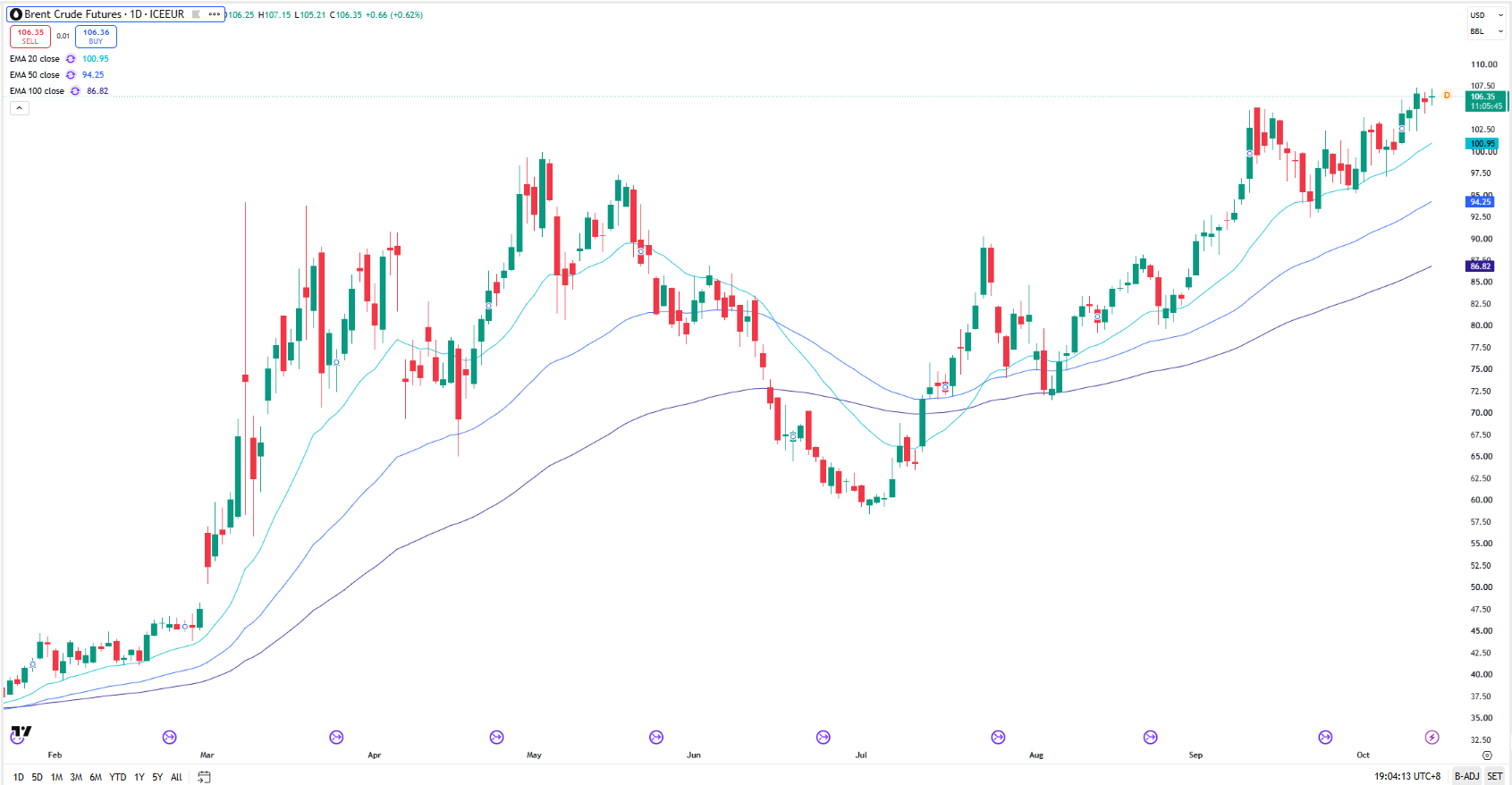
Oil prices remain elevated: Brent crude is trading above US$100 per barrel as Middle East tensions continue to fuel supply concerns.
-
Geopolitical risks are intensifying: Developments involving Iran, the Strait of Hormuz and Houthi-Saudi tensions are raising fears of further disruptions.
-
Volatility could persist: Escalating tensions may push oil prices higher, while meaningful diplomatic progress could ease the geopolitical risk premium.
Middle East Tensions Keep Oil Markets on Edge
Oil prices remain firmly in the spotlight as escalating tensions in the Middle East raise fresh concerns over global energy supplies.
Brent crude continued to trade above the psychologically significant US$100-per-barrel level amid renewed concerns over energy infrastructure and shipping routes in the region.
As of 10:30am Singapore time, WTI futures were trading at US$94.94 per barrel, up 0.87%, while Brent futures stood at US$106.58, gaining 0.84%.
The prospect of prolonged supply disruptions is also complicating the global inflation outlook. Sustained increases in energy costs could intensify price pressures, potentially limiting central banks’ flexibility to lower interest rates.
Strait of Hormuz: A Critical Flashpoint
Both oil benchmarks extended their gains during early Asian trading following reports of new Iranian tactics targeting vessels transiting the Strait of Hormuz.
The strategic waterway remains a critical artery for global energy shipments, making any threat to maritime traffic a significant concern for oil traders.
With US midterm elections approaching, geopolitical developments are also taking on a political dimension. Reports suggesting that Iran may be seeking to sustain elevated oil prices and exert pressure on Washington have raised questions about the prospects for a lasting diplomatic resolution.
Meanwhile, renewed tensions involving Houthi forces and Saudi Arabia are adding to concerns over regional energy infrastructure and the potential for further disruptions.
Why the Brent-WTI Price Gap Matters
The price difference between Brent and WTI offers another perspective on how markets are responding to geopolitical uncertainty.
At the quoted prices, Brent was trading approximately US$11.64 per barrel above WTI.
While this spread reflects several factors, including crude quality, regional supply-demand conditions and transportation costs, its widening can also signal heightened concern over internationally traded oil supplies.
For traders, movements in this spread may provide additional clues about how geopolitical risks are being priced into energy markets.
What’s Next for Oil Prices?
With geopolitical tensions elevated and diplomatic outcomes uncertain, oil markets could experience further volatility in the lead-up to the US midterm elections.
Two contrasting scenarios deserve attention:
-
Further escalation: Additional attacks on energy infrastructure, shipping disruptions or restrictions on crude exports could intensify supply concerns and support higher oil prices.
-
Meaningful de-escalation: Credible diplomatic progress, improved maritime security and the restoration of disrupted energy flows could ease supply fears and reduce the geopolitical risk premium.
Ultimately, the direction of oil prices may depend less on diplomatic rhetoric and more on developments that materially affect physical supply.
For energy traders, the key question is whether Brent’s move above US$100 marks the beginning of another sustained rally or a geopolitical premium that could unwind as tensions ease.
Navigate the Crude Oil Futures and Options market on NOVA, or monitor prices on related ETFs, CFDs and stocks now. 立即开立账户.
在 NOVA 交易 CFDs、ETF、外汇、期货、期权、贵金属和股票
NOVA 交易功能
- 接通超过 20 个全球交易所 通过超过 20 个全球交易所的 200 多个环球期货产品,把握市场机会。
- 全球股票交易机会 覆盖新加坡、美国、中国、香港、马来西亚及日本市场超过 11,000 只股票和 ETF。
- TradingView 图表支持 查看实时图表,并使用超过 100 种技术指标。
- 真正的多资产交易 通过 NOVA 的单一账簿,交易 CFDs、ETF、外汇、期货、期权、贵金属及股票。
- 美元及新元股票融资利率低至 4.5% p.a.
- 美股碎股低至 1 美元起
以低至 1 美元名义金额开始投资美股碎股,每笔订单佣金为 0.38 美元。