CN
CN  EN
EN 
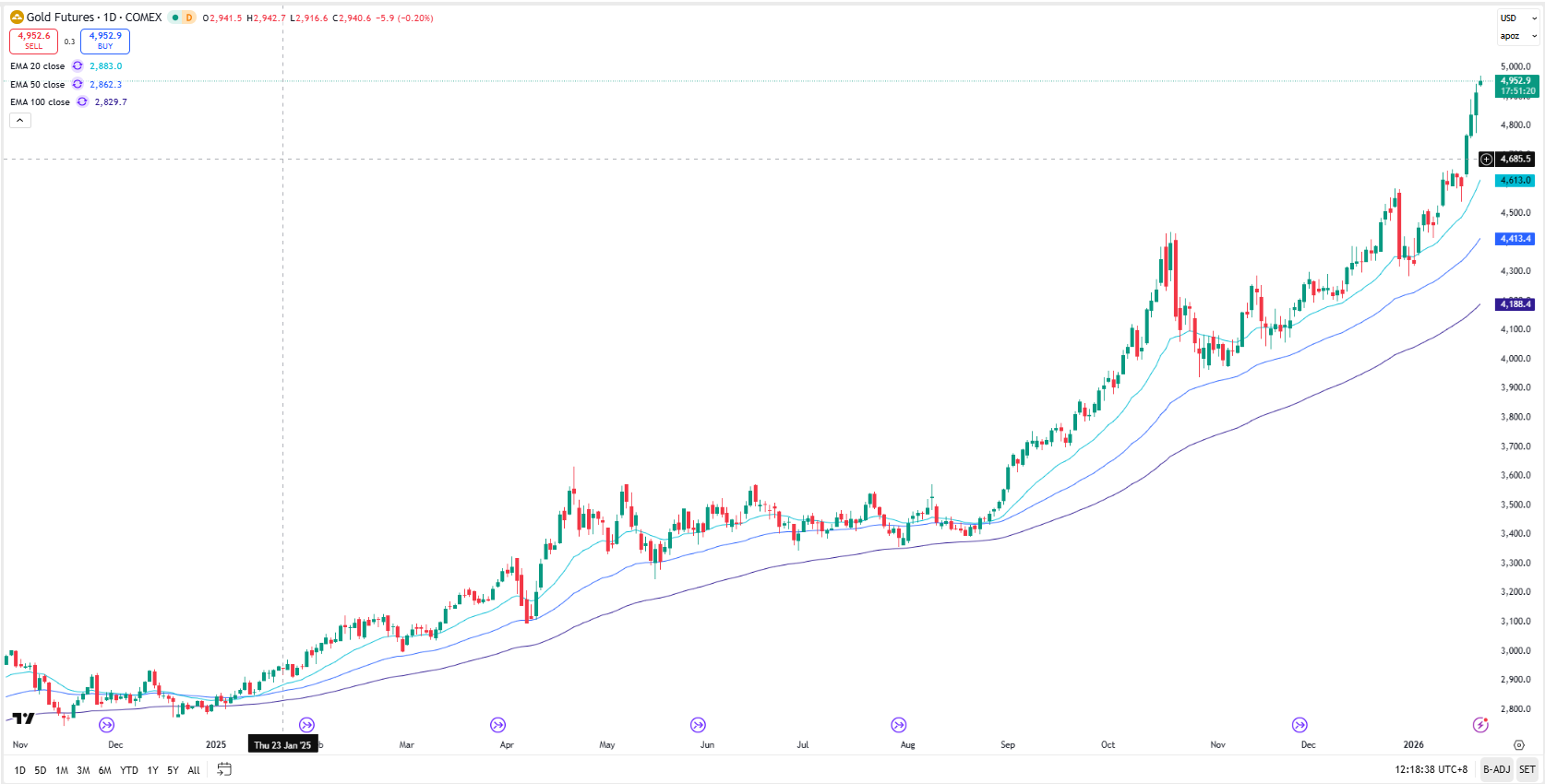
Gold has emerged as one of the most-watched assets in global markets over the past year. Prices have surged to record highs, outperforming equities, bonds, and even cryptocurrencies. What makes this rally stand out is not just the speed of the move, but the quality of the drivers behind it. Throughout 2025, Gold dominated headlines as it registered 48 all-time highs, with the rally extending well into early 2026. Gold has outperformed global equities and US Treasuries and is no longer just a hedge against uncertainty; it has firmly re-established itself as a core macro asset.
The rally we are witnessing in gold is underpinned by four major structural drivers: sustained central bank buying, expectations of easing real yields as monetary policy pivots, persistent geopolitical flare-ups, and strong inflows into gold-backed ETFs. The current rally in precious metal space is built on foundations, not frenzy.
Global central banks have been net buyers of gold for three consecutive years, with emerging market central banks actively diversifying away from US dollar assets. In fact, for the first time in five decades, foreign central banks hold more gold reserves than US Treasuries. Central bank buying reaccelerated in 3Q25 to around 220 tonnes of net purchases, and from a fundamental perspective, Central bank’s are no longer trading gold; they are strategically accumulating it.
At the same time, real yields and monetary policy uncertainty continue to support gold prices. Gold typically performs well when real interest rates fall. Geopolitical risks remain elevated, while rising sovereign debt levels and widening fiscal deficits continue to fuel concerns over currency debasement, reinforcing gold’s appeal as a store of value.
Investment demand has also been quietly building. Global gold-backed ETFs recorded five consecutive months of inflows in 2025, lifting year-to-date holdings to approximately US$89 billion, equivalent to around 674 tonnes. These steady inflows highlight resilient physical demand and signal that gold is being accumulated within portfolios rather than chased speculatively.
Looking ahead into 2026, we expect the gold rally to moderate, but the balance of risks remains skewed to the upside. Gold reaching US$5,000 per ounce appears more likely than prices falling back to US$3,000 per ounce. In our opinion, looking at the momentum in Gold, despite easing concerns of rift around “Greenland”, Gold bulls likely won’t stop before breaching the US$5000 mark.
Gold’s more volatile cousin Silver, has also entered a strong uptrend and is increasingly benefiting from many of the same macro drivers as gold. However, silver enjoys additional support from its industrial demand profile, which sets it apart.
Like gold, silver benefits from declining real yields, geopolitical uncertainty, and diversification flows. But unlike gold, more than half of silver demand comes from industrial uses, including solar panels, electronics, electric vehicles, and energy-transition technologies. The silver market is also facing a persistent supply deficit. Global silver supply has struggled to keep pace with rising demand, with mine production constrained and recycling unable to fill the gap. China plays a critical role here, as it remains a key driver of industrial silver demand, particularly through solar manufacturing and advanced electronics. Any stabilisation or recovery in Chinese industrial activity could further tighten the silver market.
With silver prices just an arm’s length from the US$100 per ounce mark, the metal is beginning to reflect both its monetary and industrial value. Historically, silver tends to outperform gold in the later stages of precious-metal bull cycles, and the narrowing gold-silver ratio reinforces this view. While silver is more volatile than gold, its upside potential remains compelling in an environment of supply tightness and structurally strong demand.
What’s interesting is that while Gold may pause or consolidate in the near term, the structural drivers behind the rally remain firmly intact. We expect precious metals to retain bullish bias; however, a two-sided, volatile rally rather than a straight line. Pullbacks may offer opportunities to accumulate gradually, with gold best viewed as portfolio insurance. Meanwhile, Silver offers a higher-beta expression of the same macro theme, supported by additional industrial demand and supply constraints.

Take a view on Gold and Silver Micro Futures now. 立即了解详情!
Or take a view on precious metals via ETFs, mining Stocks and Forex now!
Trade CFDs, ETFs, Forex, Futures, Options, Precious Metals, and Stocks on NOVA
Features of trading on NOVA
- 访问 20 多个全球交易所
从 20 多个全球交易所的 200 多个全球期货中捕捉机会 - 全球股票的交易机会
Over 11,000 Stocks and ETFs across Singapore, US, China, Hong Kong, Malaysia and Japan markets. - Charting Powered by TradingView
View live charts and gain access to over 100 technical indicators - True Multi-Asset Trading
Trade CFDs, ETFs, Forex, Futures, Options, Precious Metals and Stocks on a single ledger on NOVA - USD Shares Margin Rate at Only 4.5% p.a
- Fractional Shares from US$1