CN
CN  EN
EN 
Market insights from Global X Japan
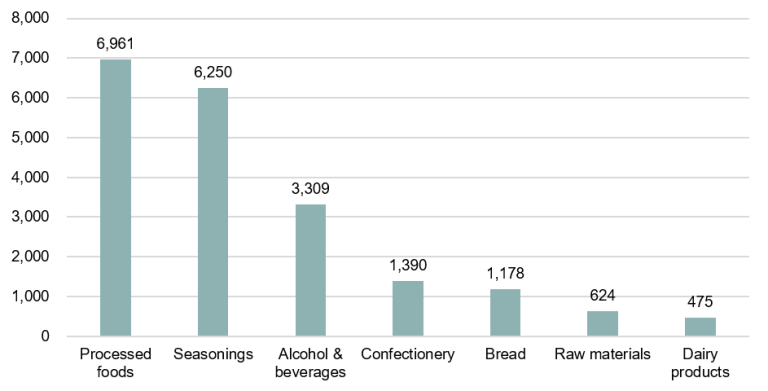
In Japan, price revisions for food and daily goods tend to cluster in April and October. According to a survey released by Teikoku Databank on September 30, 195 major food manufacturers raised prices on a total of 3,153 items in October, with an average increase of 10% per hike. Alcohol and beverages were the largest category at 1,399 items, and seasonings accounted for 820 items. Both are everyday products.
Behind this are rising costs for energy, logistics, and labor, in addition to raw materials and packaging. Hikes have spread to everyday foods such as soy sauce and frozen foods. Since July, they have also spread beyond food, to eating out, daily goods, household consumables, and leisure. The 2026 total stands at 20,187 items confirmed so far, above 20,000 for the second year in a row. This shows that a multi-year trend of price increases has continued into 2026.
Food Price Hikes by Category, 2026 (Jan-Dec, confirmed so far)
In an earlier issue, we noted that Japanese outbound travel spending has kept rising despite the weak yen, suggesting that consumer spending may not be as weak as reports imply. This wave of price hikes tests that resilience again, this time in everyday areas closer to home, such as groceries and daily goods. Whether sales volumes hold up despite continued hikes, or consumers cut back and shift to cheaper products, will need to be judged by upcoming company earnings and sales data.
For investors, the key point is that the gap between companies that can pass price increases on to customers and those that cannot becomes clearer during large-scale hike periods like this one. With raw material and labor costs still rising, investors are likely to pay closer attention in the coming earnings season to which companies can make price hikes stick, thanks to brand strength and distribution networks, and which are squeezed by price competition.
Related ETFs from Global X Japan lineup
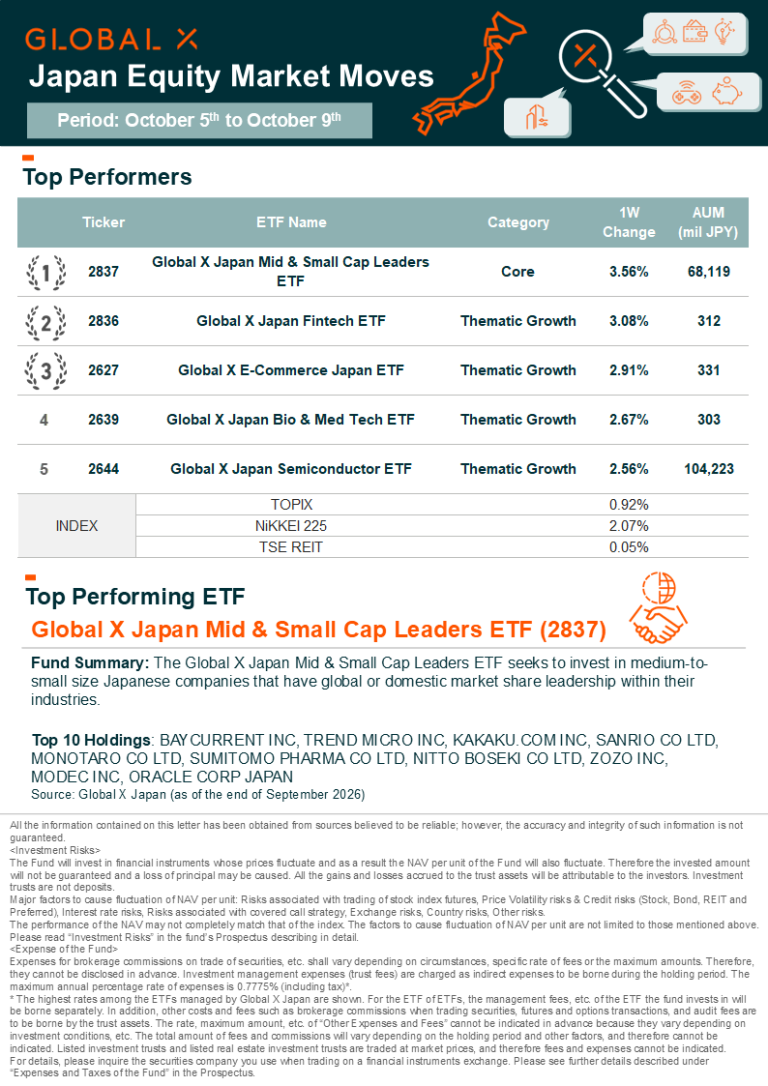
Global X Japan Top Performers of the Week
Japan in Focus
Continue exploring the themes shaping Japan’s markets with Japan in Focus, where you’ll find our latest bi-weekly breakdowns of two stocks and two ETFs, alongside past editions.
When you’re ready to put your research into action, explore Japanese stocks and ETFs on NOVA, with free market data and no platform fee.
Ready to explore the Japan market?
Receive SGD 10* for your first Japanese stock · ETF trade on NOVA.
🔴 Receive a SGD 10* first-trade credit
从 1 October – 31 December 2026, place your first trade in any Tokyo Stock Exchange (TSE) listed stock or ETF on NOVA to receive a SGD 10 trading credit.
🔴 <October exclusive> Receive an additional SGD 20* bonus
Place at least 1 buy trade in both November and December 2026 to receive an additional SGD 20 trading credit.