From Sushi Plates to Shareholder Gains: Why Sushiro’s Stock Split Is Turning Heads in Japan

24 6 月 2026

If you’ve ever waited in line for a table at Sushiro, you’ll know one thing: people are willing to queue for good sushi.

What many diners may not realise is that behind those colour-coded conveyor belts sits Food & Life Companies Ltd. (TSE: 3563), the operator of Japan’s largest kaiten-zushi chain and one of the country’s standout consumer stocks. Now, the company is serving up something that has investors paying close attention—a highly anticipated 2-for-1 stock split set to take effect on 29 June 2026.

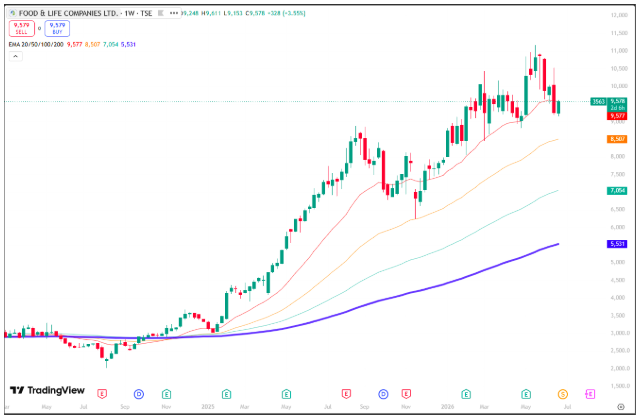
As of today’s market action, the stock has been showing renewed momentum, rising 1.62% to ¥9,597 in morning trading on steady retail volume. While Sushiro’s strong brand and resilient demand story continue to support investor interest, the bigger catalyst right now lies in a corporate action that could make the shares more accessible to a wider pool of investors.

With the stock split just days away, Food & Life Companies has become one of the more closely watched names on the Tokyo Stock Exchange, offering investors a front-row seat to some of the key themes driving Japan’s market today—from shareholder-friendly reforms and improving corporate profitability to the continued recovery of inbound tourism.

Riding Japan’s Corporate Governance Tailwind

For decades, many high-quality Japanese equities were difficult for retail investors to access due to Japan’s minimum trading unit system, which typically requires investors to purchase at least 100 shares. At nearly ¥9,600 per share, a standard lot of Food & Life Companies would cost close to ¥1 million.

As part of broader efforts by the Tokyo Stock Exchange to improve market accessibility and encourage greater retail participation, companies across Japan have increasingly turned to stock splits. By halving its nominal share price next Monday, Food & Life Companies is effectively lowering the entry barrier for a wider pool of investors while improving liquidity in its shares.

The timing is notable because the corporate action follows a strong set of earnings results and an upgrade to the company’s FY2026 outlook.

In its latest second-quarter earnings report, the company delivered a solid beat across key metrics:

  • Revenue climbed to ¥131.53 billion, surpassing expectations as domestic pricing power remained resilient and overseas expansion continued to gain traction.
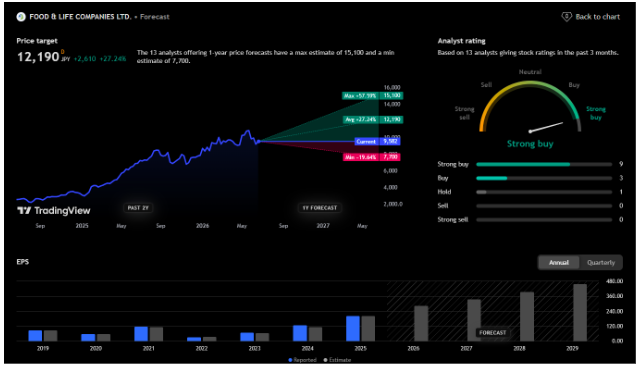
  • Adjusted EPS reached ¥81.39, beating consensus estimates by 14.78%.
  • Quarterly net income surged 61% year-on-year, highlighting strong operating leverage despite ongoing cost pressures.

Benefiting from Japan’s Tourism Boom

Food & Life Companies also serves as a proxy for one of Japan’s strongest structural themes: inbound tourism.

While some consumer-facing businesses have experienced uneven demand patterns, Sushiro’s value-for-money positioning continues to resonate with both local diners and international visitors. The company’s extensive network of outlets allows it to benefit directly from rising tourist traffic while maintaining broad appeal among domestic consumers.

Even amid raw material inflation and fluctuating seafood supply chains, Food & Life Companies has maintained a healthy trailing operating margin of 11.11%. A key contributor has been its investment in automation and operational efficiency, including proprietary technologies such as IC-tagged plate tracking systems that help optimise food management and reduce waste.

Why Investors Are Paying Attention

As a consumer cyclical growth story, Food & Life Companies commands a premium valuation. The stock currently trades at a trailing P/E ratio of 37.59 times, reflecting market expectations for continued earnings growth and expansion.

Following the stock split on 29 June, investor attention may increasingly shift toward shareholder returns. The company’s next ex-dividend date is scheduled for 29 September 2026, giving investors an opportunity to participate in its dividend programme while benefiting from the improved accessibility created by the split.

总结

Food & Life Companies is a compelling example of how Japan’s corporate governance reforms are reshaping the investment landscape.

The company has combined strong earnings execution, technology-driven operational efficiency, growing exposure to Japan’s tourism recovery and a shareholder-friendly 2-for-1 stock split. Together, these factors are helping to position the Sushiro parent as a stock worth watching in the Japanese consumer sector.

More broadly, the company reflects several themes currently attracting investors to Japan: improving corporate profitability, stronger shareholder returns, growing retail participation and continued support from inbound tourism. As Japanese companies increasingly embrace shareholder-friendly initiatives, investors are finding more opportunities across one of Asia’s most dynamic equity markets.

Trade Japanese Stocks & ETFs with Live Prices on NOVA

As investor interest in Japan continues to grow, having access to real-time market information has become increasingly important.

With free live pricing on Japanese stocks through NOVA, investors can monitor market-moving developments as they happen and access a wide range of opportunities through a single trading platform.

On NOVA, clients can access:

  • Live prices for Japanese stocks
  • Live prices for Japan-listed ETFs
  • Nikkei 225-linked ETFs and index products
  • Thousands of Japanese securities through a single account
  • Opportunities across stocks, ETFs, futures and other exchange-listed products

Whether you’re monitoring Toyota, Sony, Nintendo, Tokyo Electron, Advantest or the Nikkei 225 itself, live pricing can help investors and traders respond more effectively to market developments and identify opportunities as they emerge.

Japan Offers Opportunities Across Multiple Strategies

Japan’s equity market continues to attract global attention as AI-related investment, improving corporate profitability, shareholder-friendly reforms and supportive economic conditions drive renewed investor interest.

Some investors may focus on long-term exposure through quality Japanese companies and diversified ETFs. Others may seek shorter-term opportunities through futures, leveraged products or thematic sectors benefiting from structural growth trends.

With access to Japanese stocks, ETFs, Nikkei-linked products and live prices through NOVA, investors have a broader toolkit to express different market views and trading strategies.

Whether your outlook is bullish, bearish or somewhere in between, Japan’s market offers opportunities for both investors and traders alike.

Ready to explore Japan’s market opportunities?

Open a Phillip Nova account today and gain access to Japanese stocks, ETFs and global markets through a single trading platform.

交易所交易基金 (ETF) 是一种有价证券,可用于跟踪几乎所有内容,包括特定指数、行业、商品或越来越多的主题。它们最常用于跟踪一篮子股票,通常可以通过与常规股票相同的渠道访问。 ETF 通常分为被动管理的 ETF,它们仅反映它们所跟踪的证券(例如 STI),以及试图提供更高回报或特定投资目标的主动管理的 ETF,通常考虑到预先指定的主题(例如 ARK Invest 的创新 ETF)。

我为什么要交易 ETF 差价合约?

  • 多年来,ETF 越来越受欢迎。 2020 年是 ETF 最好的一年,全球股票 ETF 在 12 个月内的流入量超过 $1T。使用差价合约获得 ETF 的敞口可以提高资本效率,因为只需合约价值的一部分作为保证金即可建立头寸。
  • ETF 尤其受到寻求相对轻松的投资体验,同时希望接触一系列特定且相对易懂的证券的投资者的欢迎。交易 ETF 差价合约通过消除交易者持有多种货币以访问全球 ETF 的需要,带来了更大的便利。
  • 希望参与大流行后经济复苏的投资者可以在著名的 SPDR S&P 500 ETF (SPY) 中建仓,该指数跟踪标准普尔 500 指数的表现。另一位可能相信环境未来重要性的投资者,社会和治理问题 (ESG) 可能会发现,越来越多的 ESG 主题 ETF 选择跟踪一篮子 ESG 评级高的公司是一项不错的投资,而不是手动挑选单个股票。 ETF 差价合约可以作为一种强大的工具,交易者可以通过持有多头或空头头寸从市场的两个方向获利。

看看我们提供的两种 ETF 差价合约:

1) ARKK 被击沉了吗?

方舟创新ETF(ARKK) ARKK 是 ARK Invest 积极管理的 ETF,根据其创新和行业颠覆潜力投资于一系列公司。 ARKK 最大的持股是特斯拉、Square 和 Zoom 等公司。 ARKK 从 12 日的峰值下跌约 -33% 2 月,由于市场经历了资金的避险外流,今年迄今处于亏损状态。然而,超级明星基金经理凯西伍德一直在加倍押注,购买更多正在经历动荡时期的成长型股票,如 DraftKings、Peloton、Teladoc 和特斯拉。在她看来,ARKK 正在玩长期游戏,并且仍然坚信这些成长型股票在当前波动之后的长期前景。同样在流出方面,投资者仍然对 ARKK 押注很大,因为 ARK Invest 今年在其所有六只基金中仅损失了约 $1.2B 的资产,而同期则流入 $15.1B。最近,投资者一直紧张地关注 ARKK 的一篮子科技股,因为它们未来的盈利潜力仍然容易受到高通胀的侵蚀——这是最近几周市场的主要担忧。随着大宗商品——近期通胀担忧加剧的主要因素——从历史高位急剧下跌,投资者对恶性通货膨胀的担忧是否被夸大了?

2) 寻找亚洲股票的敞口?

iShares MSCI Asia ex Japan ETF (AAXJ) AAXJ 目前的交易价格为 -10.6%,偏离 2 月份创下的历史高点,在当时亚洲范围内的股票抛售中放弃了收益。鉴于该 ETF 持有的略高于 40% 的资产位于中国,中国股市的持续动荡目前在 AAXJ 中几乎完美延续,因为中国投资者在过去一年取得了惊人的收益后喘了口气。展望未来,亚洲——尤其是中国,正在加速其经济复苏。外界普遍预计,中国将成为今年表现最好的主要经济体之一,大大提振企业盈利前景。随着亚洲其他地区和世界逐渐开放自己的经济,在贸易前景增强的情况下,AAXJ 可能会再次受益于亚洲的强劲表现。

差价合约可用于在 Phillip MetaTrader 5 (MT5) 上进行交易。

交易差价合约的特点:

  • 在牛市和熊市中交易
    进入多头和/或空头头寸的能力使交易者能够利用上涨和下跌的市场。
  • 进入门槛更小
    灵活且较小的合约规模。这意味着交易者将能够以适度的资本签订合同。
  • 没有到期日期或交付风险
    与通常具有固定到期日的期货不同,差价合约允许交易者永久持有头寸。差价合约以现金结算,无需担心标的资产的交割。


使用飞利浦 MT5 的好处:

在提供低点差的动态平台上以零佣金进行交易。与 Autochartist 和 交易中心指标,并在移动、网络和桌面应用程序上可用,您将永远不会错过使用 Phillip MT5 的交易机会。

注册一个免费的 30 天 Phillip MetaTrader 5 模拟账户

更多市场趋势

投资者如今拥有比以往更多的工具来表达他们对新加坡市场的观点。 除了传统的投资产品,如 股票、ETF 和期货, 杠杆型与反向型交易所交易产品(ETP) 也逐渐成为适用于短期策略的灵活选择。

阅读更多 >

黄金反弹至 4,300 美元上方:复苏能否延续?

阅读更多 >

Trump’s US Stock Bets: The AI, Chip and Tech Trades Catching Wall Street’s Attention

阅读更多 >