EN
EN  CN
CN 
Key Takeaways
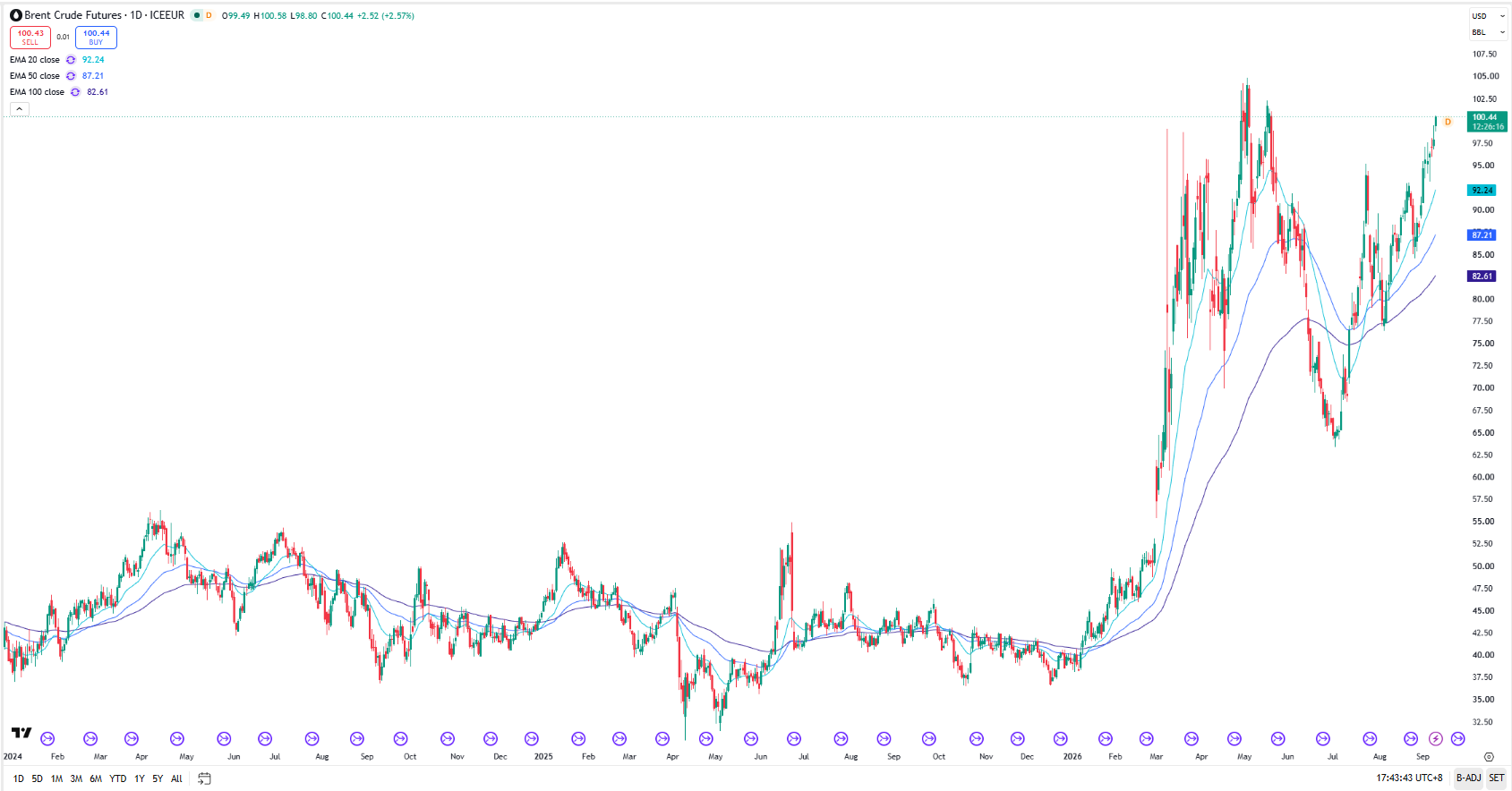
- Brent has touched US$100 as Middle East tensions and disruptions to oil flows intensify supply concerns.
- Physical supply is now key: Further declines in Hormuz flows, tanker movements and crude loadings could determine whether oil can sustain a move above US$100.
- The risk extends beyond oil: Prolonged elevated crude prices could reignite inflation pressures, complicate the interest-rate outlook and increase stagflation risks.
Brent crude has touched the psychologically important US$100-per-barrel mark, as escalating Middle East tensions and concerns over disruptions to regional oil infrastructure and shipping continue to support prices.
But reaching US$100 may only be part of the story. Increasingly, traders are watching whether the conflict results in a sustained reduction in physical oil supply and whether crude prices can remain elevated.
Reuters estimates that oil flows through the Strait of Hormuz remain substantially below pre-war levels, although they have not been completely curtailed. Middle East crude shipments are currently estimated at around 11 million barrels per day, compared with approximately 18 million barrels per day before the war.
The fact that oil continues to flow through the region remains important. While geopolitical risk has helped push Brent to US$100, the next phase could depend increasingly on whether those disruptions deepen.
What Could Keep Brent Above US$100?
The key question for oil traders is no longer simply whether Brent can reach US$100, but whether geopolitical risk translates into a measurable and sustained loss of physical barrels.
Earlier in the session, WTI futures were trading at US$94.22 per barrel, while Brent climbed from US$99.30 to touch US$100.
Oil markets have already demonstrated their sensitivity to changes in perceived supply risk. However, there is an important distinction between Brent briefly touching US$100 on geopolitical concerns and prices remaining above that level because less oil is physically reaching the global market.
Further declines in tanker traffic, export loadings or production could strengthen concerns over a prolonged supply disruption. Conversely, resilient tanker flows and alternative export routes could ease some of the pressure.
Why US$100 Oil Matters Beyond Energy Markets
The bigger issue may be what sustained high oil prices mean for the global inflation and interest-rate outlook.
Crude oil feeds through into fuel, transportation, manufacturing and logistics costs across the economy. If prices remain elevated for an extended period, businesses could face higher input costs while households contend with more expensive energy and transportation.
That creates an uncomfortable combination for policymakers: renewed inflation pressure alongside weaker economic growth.
Central banks may then have less room to ease monetary policy, while a sufficiently persistent inflation shock could revive expectations that interest rates may need to remain higher for longer or potentially rise further.
This is where the risk of stagflation, characterised by elevated inflation alongside weak economic growth, begins to enter the conversation.
What Higher Oil Prices Could Mean for Asia
Asia has an additional vulnerability because many of its major economies depend heavily on imported energy.
Persistently higher oil prices could increase import costs, pressure currencies and raise inflation across energy-intensive economies. Companies could also face higher transportation and production costs, potentially squeezing margins if those increases cannot be passed on to consumers.
The impact of US$100 Brent therefore extends well beyond energy traders. It could increasingly influence equities, currencies, bonds and central-bank expectations across the region.
What Should Traders Watch Next?
With Brent having touched US$100, what happens to physical oil flows may matter more than the milestone itself.
Key indicators to watch include:
- Strait of Hormuz tanker traffic
- Middle East crude export loadings
- Damage or disruption to energy infrastructure
- Alternative supply and export routes
- Inflation and interest-rate expectations
- Whether Brent can sustain prices around or above US$100
If physical disruptions worsen, markets may increasingly price the economic consequences of a prolonged supply shock. If flows stabilise, however, some of the geopolitical premium embedded in crude prices could ease. The bigger question is no longer whether Brent can reach US$100, but whether oil stays elevated long enough to reshape the inflation, interest-rate and global growth outlook.
Navigate the Crude Oil Futures and Options market on NOVA, or monitor prices on related ETFs, CFDs and stocks now. Open an account here.
Trade CFDs, ETFs, Forex, Futures, Options, Precious Metals, and Stocks on NOVA
Features of trading on NOVA
- Gain Access to Over 20 Global Exchanges
Capture opportunities from over 200 global futures from over 20 global exchanges - Trade Opportunities in Global Stocks
Over 11,000 Stocks and ETFs across Singapore, US, China, Hong Kong, Malaysia and Japan markets. - Charting Powered by TradingView
View live charts and gain access to over 100 technical indicators - True Multi-Asset Trading
Trade CFDs, ETFs, Forex, Futures, Options, Precious Metals and Stocks on a single ledger on NOVA - USD & SGD Shares Margin Rate at Only 4.5% p.a
- Fractional Shares from US$1
Start investing in fractional shares from US$1 notional value, at US$0.38 commission per order.