EN
 CN

Key Takeaways
-
The US midterm election outcome could influence Gold’s direction through changes in fiscal expectations, Treasury yields and the US dollar.
-
Gold’s recent correction could attract long-term investors, although clearer technical and macroeconomic signals may be needed before buying interest strengthens.
Gold Faces a Critical Test Amid US Election Uncertainty
Gold remains under pressure as investors assess the unfolding US midterm election results and their potential implications for financial markets.
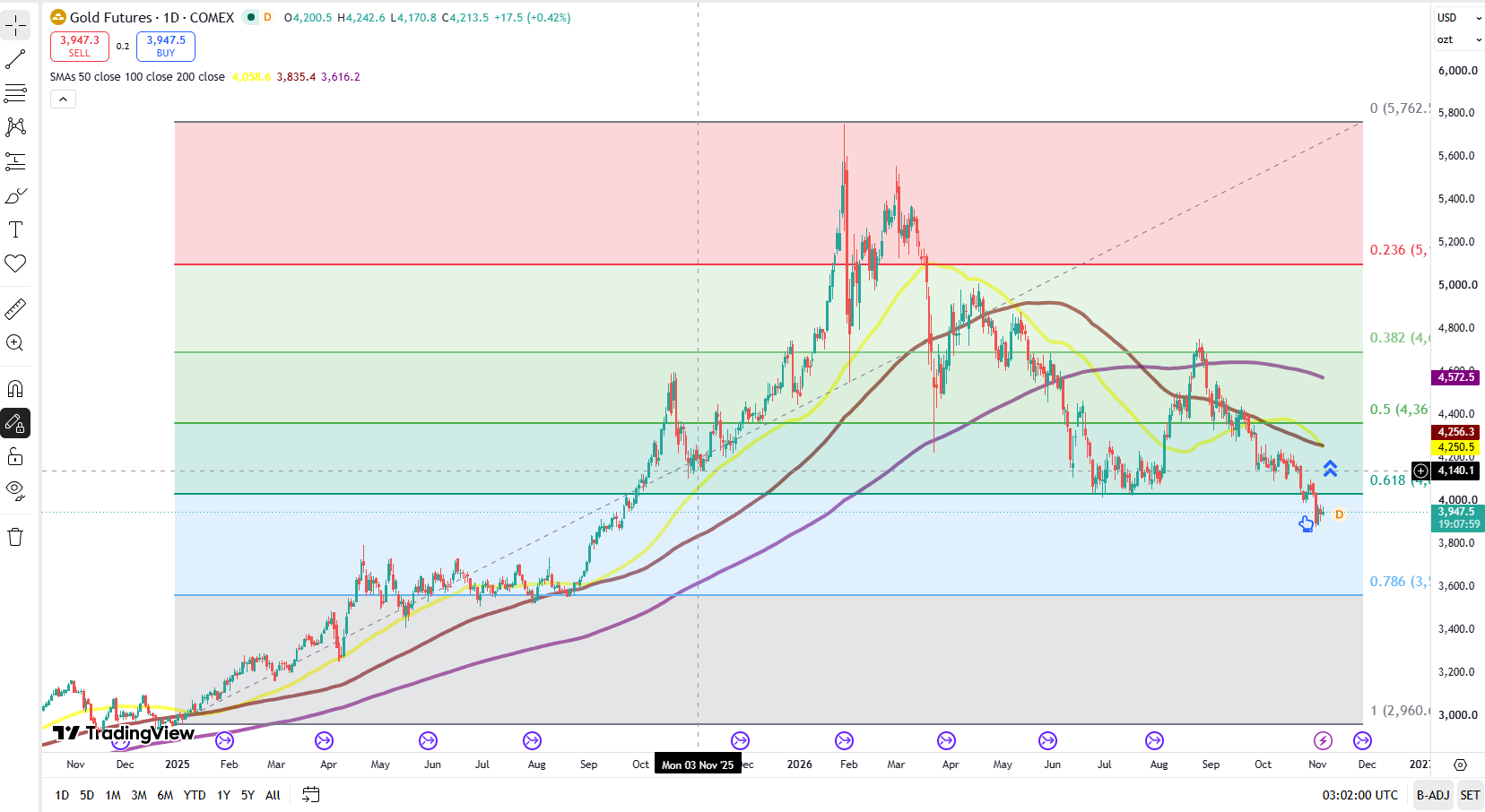
Spot Gold slipped to an intraday low of US$3,893.31 on Tuesday before staging a modest recovery, while Gold futures traded around US$3,948.50 per ounce, up approximately 0.23% in early Asian trading.
Although easing oil prices have helped alleviate some inflation concerns, elevated US Treasury yields, a relatively firm US dollar and expectations of further Federal Reserve tightening continue to weigh on Gold’s recovery.
Against this backdrop, the US midterm elections have emerged as a key near-term catalyst. But could the election outcome trigger a meaningful reversal in Gold, or will broader macroeconomic forces continue to dictate its direction?
Could the US Midterms Provide a Catalyst?
Investors are closely watching whether Democrats can regain control of Congress and potentially constrain President Trump’s fiscal agenda.
A divided Congress could limit the scope for additional government spending, potentially easing fiscal concerns and reducing upward pressure on Treasury yields and the US dollar. Such a scenario could provide some relief for Gold.
However, the relationship is far from straightforward.
The more important question is whether the election outcome will materially alter expectations surrounding fiscal policy, inflation and interest rates, or simply introduce another layer of uncertainty into an already volatile market environment.
While the technical outlook for Gold has weakened, greater political and macroeconomic clarity could gradually encourage long-term investors to reassess potential entry opportunities.
For now, some investors may prefer to remain on the sidelines until there is greater clarity on Treasury yields, the US dollar and broader market sentiment.
Why Lower Oil Prices Haven’t Lifted Gold
Brent crude’s retreat from recent highs has helped ease concerns over persistent energy-driven inflation and the possibility of further aggressive monetary tightening.
Ordinarily, softer oil prices could be supportive of Gold by reducing inflationary pressure and potentially tempering interest rate expectations.
Yet Gold has struggled to sustain a meaningful rebound.
This suggests that Treasury yields, the US dollar and Federal Reserve policy expectations remain particularly influential drivers of precious metals prices.
With markets still assigning a high probability to another Federal Reserve rate increase in December, elevated yields continue to increase the opportunity cost of holding non-yielding assets such as Gold.
Consequently, even as geopolitical and inflationary pressures evolve, Gold may struggle to establish a sustained recovery without a corresponding shift in monetary policy expectations.
Gold’s Key Technical Levels: What Should Investors Watch?
From a technical perspective, US$3,870–3,900 represents an important near-term support zone.
A decisive break below this region could expose Gold to further weakness towards US$3,800, while a deeper correction towards US$3,700 cannot be ruled out if Treasury yields and the US dollar strengthen further.
Conversely, the US$4,000 psychological level, which previously provided support, has now emerged as an important resistance area.
A sustained recovery above this level could signal improving sentiment, although confirmation from broader macroeconomic developments would remain important.
Gold’s next directional move may ultimately depend less on the election result itself and more on how capital flows between equities, bonds and safe-haven assets respond to the changing market environment.
For instance, a meaningful correction in equities could encourage renewed investment demand for Gold. However, elevated risk-free yields may continue to compete for investor capital, potentially limiting the strength of any recovery.
Could Gold’s Correction Present an Opportunity?
Despite the recent weakness, the broader structural investment case for Gold has not necessarily disappeared.
For investors with a longer-term perspective, the correction could present opportunities to reassess their exposure to precious metals, particularly if political clarity and shifting monetary policy expectations help stabilise market sentiment.
However, the immediate technical and macroeconomic backdrop continues to favour patience rather than assumptions of an imminent reversal.
With Gold trading below US$4,000 and several important catalysts still unfolding, investors will be closely watching whether support around US$3,870–3,900 can hold and whether Treasury yields and the US dollar begin to ease.
Ultimately, the US midterm elections may influence Gold’s next move, but a sustained recovery could depend on something more fundamental: a meaningful shift in the interest rate outlook and investor capital flows.
Navigate the Gold and Crude Oil Futures and Options market on NOVA, or monitor prices on related ETFs, CFDs and Stocks now. Open an account here.
Click here to learn more about our 1-Ounce Gold and 100-Ounce Silver Futures promotion now.
Trade CFDs, ETFs, Forex, Futures, Options, Precious Metals, and Stocks on NOVA
Features of trading on NOVA
- Gain Access to Over 20 Global Exchanges
Capture opportunities from over 200 global futures from over 20 global exchanges - Trade Opportunities in Global Stocks
Over 11,000 Stocks and ETFs across Singapore, US, China, Hong Kong, Malaysia and Japan markets. - Charting Powered by TradingView
View live charts and gain access to over 100 technical indicators - True Multi-Asset Trading
Trade CFDs, ETFs, Forex, Futures, Options, Precious Metals and Stocks on a single ledger on NOVA - USD & SGD Shares Margin Rate at Only 4.5% p.a
- Fractional Shares from US$1
Start investing in fractional shares from US$1 notional value, at US$0.38 commission per order.