EN
EN  CN
CN 
Key Takeaways
- Fresh U.S. sanctions targeting Iran’s oil and weapons sectors are keeping geopolitical risks elevated.
- At the same time, renewed Iran-Oman talks have raised hopes of improved shipping flows through the Strait of Hormuz, prompting markets to unwind part of the immediate supply-risk premium.
- With crude increasingly reacting to physical supply developments rather than geopolitical headlines alone, tanker movements through Hormuz remain a key signal for traders to watch.
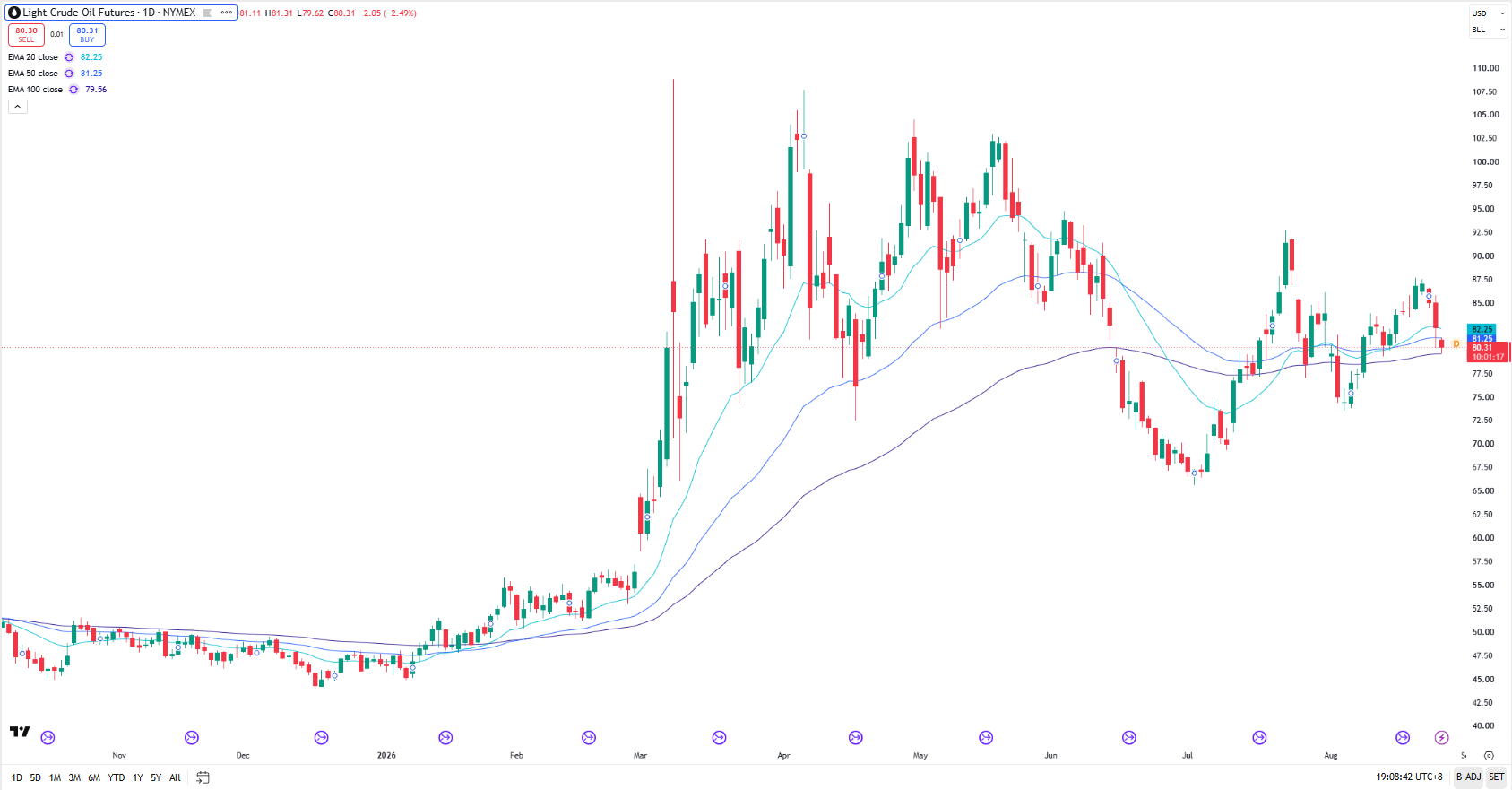
Crude oil prices have fallen more than 7% this week as markets unwind part of the geopolitical risk premium that had pushed prices higher amid concerns over potential supply disruptions through the Strait of Hormuz.
While the Trump administration has expanded sanctions aimed at increasing pressure on Iran’s economy, Tehran has rejected the measures and vowed to resist. Yet recent price action suggests geopolitical headlines alone may no longer be enough to sustain a significant risk premium. Increasingly, traders appear to be looking for evidence of actual disruptions to tanker movements and physical oil flows.
Why Oil Prices Are Retreating
Both WTI and Brent crude fell sharply on Tuesday before stabilising. For months, oil prices carried a substantial premium reflecting the possibility of prolonged disruption to the Strait of Hormuz, one of the world’s most important energy chokepoints.
The latest catalyst for the pullback has been the resumption of Iran-Oman discussions over shipping traffic through Hormuz, including the possibility of establishing a temporary navigational corridor.
Rather than signalling a deterioration in the underlying oil story, the recent correction appears to reflect a reassessment of the probability and duration of potential supply disruptions.
As of 9:50am Singapore time, WTI futures traded at US$80.61 per barrel, down 2.21%, while Brent futures stood at US$85.49, down 0.30%.
From Headlines to Physical Supply
President Trump also said mines had been cleared from the Strait of Hormuz—an important development for an oil market increasingly distinguishing between geopolitical risk and actual physical supply disruption.
Since the U.S.-Iran escalation, crude oil has largely traded within a broad US$70-US$90 per barrel range, reflecting the market’s changing assessment of geopolitical and supply risks.
However, negotiations should not be mistaken for normalisation.
Traffic through the Strait of Hormuz remains well below pre-war levels, while the proposed navigational corridor remains a framework for potentially restoring commercial flows rather than a return to normal shipping conditions.
What Crude Oil Traders Should Watch
The market now appears increasingly sensitive to tangible developments in physical supply. Signs of de-escalation have prompted sharp selling, while sanctions and political threats are generating less pronounced reactions unless they threaten to translate into measurable supply losses.
For traders, several developments remain firmly in focus:
- Progress in Iran-Oman negotiations
- Tanker traffic through the Strait of Hormuz
- Any measurable disruption or recovery in crude flows
- Further U.S. sanctions and Iran’s response
- Key technical levels as WTI and Brent navigate heightened volatility
With geopolitical developments capable of rapidly shifting expectations for global oil supply, volatility could remain a defining feature of the crude oil market.
Trade the Moves in Global Energy Markets
Whether crude oil moves on escalating geopolitical risks, easing supply concerns or changing global demand expectations, futures provide traders with the flexibility to take a view on both rising and falling markets.
Navigate the Crude Oil Futures and Options market on NOVA, or monitor prices on related ETFs, CFDs and stocks now. Open an account here.
Trade CFDs, ETFs, Forex, Futures, Options, Precious Metals, and Stocks on NOVA
Features of trading on NOVA
- Gain Access to Over 20 Global Exchanges
Capture opportunities from over 200 global futures from over 20 global exchanges - Trade Opportunities in Global Stocks
Over 11,000 Stocks and ETFs across Singapore, US, China, Hong Kong, Malaysia and Japan markets. - Charting Powered by TradingView
View live charts and gain access to over 100 technical indicators - True Multi-Asset Trading
Trade CFDs, ETFs, Forex, Futures, Options, Precious Metals and Stocks on a single ledger on NOVA - USD & SGD Shares Margin Rate at Only 4.5% p.a
- Fractional Shares from US$1
Start investing in fractional shares from US$1 notional value, at US$0.38 commission per order.