EN
EN  CN
CN 
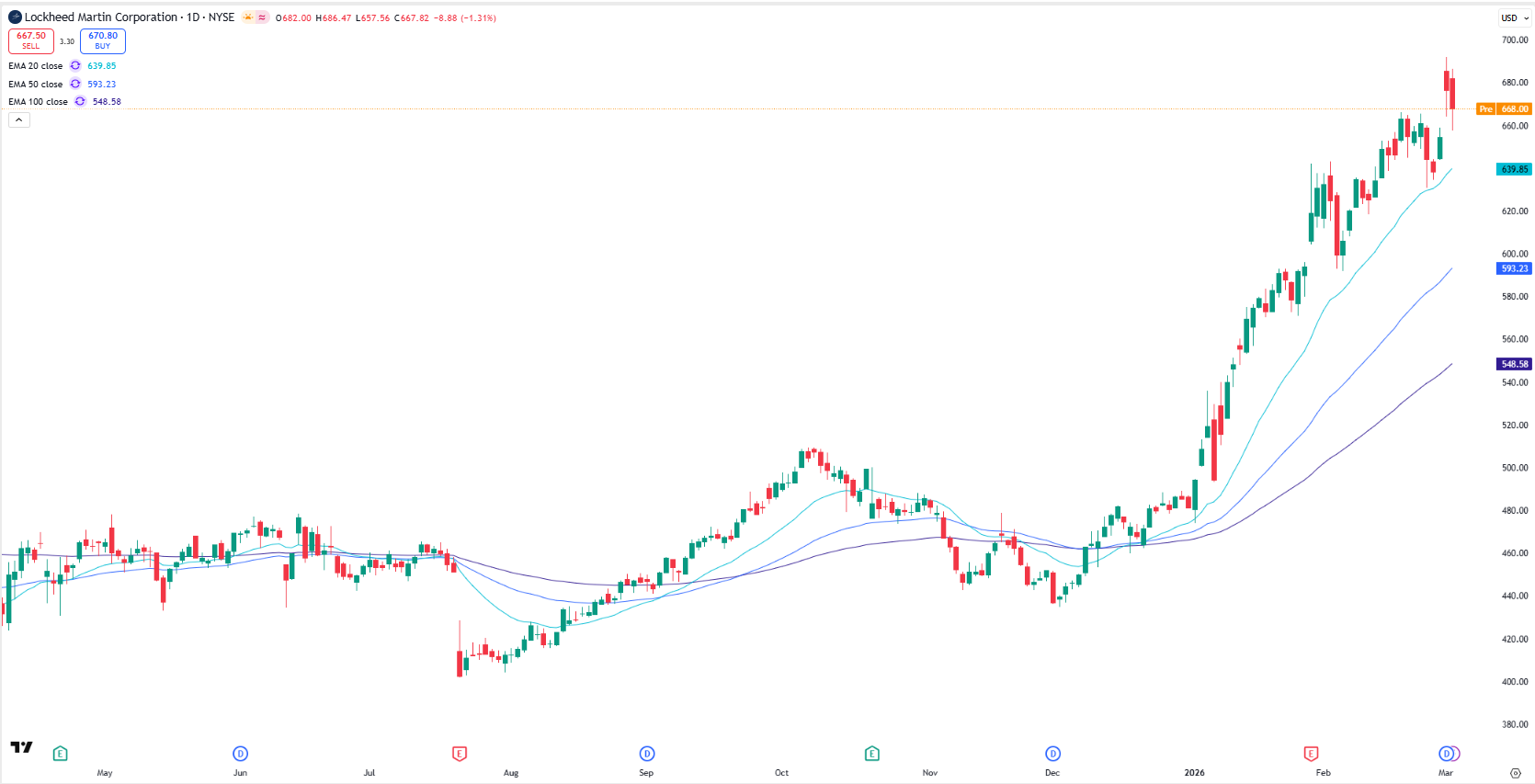
The 2026 US-Iran geopolitical tensions, which began with the opening strikes of Operation Epic Fury, has rapidly evolved into one of the most consequential geopolitical flashpoints of the decade. Missile exchanges, air defence interceptions, and tensions surrounding the Strait of Hormuz triggered immediate reactions across global markets. Oil spiked. Shipping rates surged. And defence-related equities rallied sharply as investors rotated into perceived beneficiaries of escalating conflict.
At first glance, the move in defence stocks resembles a familiar pattern. In prior crises, primes such as Lockheed Martin, RTX Corporation, and Northrop Grumman have acted as geopolitical barometers – rising when tensions flare and consolidating once headlines cool. Markets initially treat these episodes as short-term risk premium trades, driven by uncertainty rather than fundamental re-rating.
Though, the 2026 cycle may be materially different.
The Inventory Replenishment Supercycle (Medium-Term)
Unlike past “one-off” strikes, this conflict follows years of global stockpile depletion stemming from sustained regional tensions and allied support programs. Reports indicate that thousands of interceptors – including Patriot and THAAD-class systems – along with precision munitions such as Tomahawks, were consumed within the first 72 hours of combat operations.
Missile inventories are not replenished overnight. Production lines for advanced interceptors and guided munitions operate under complex supply chains with multi-quarter lead times. The result is not merely a temporary demand spike, but a visible, multi-year “fill-the-gap” production ramp. Rebuilding inventories across the U.S. and allied nations could potentially support order backlogs for 24 to 36 months, providing earnings visibility that extends well beyond the immediate conflict window.
This dynamic differentiates the current rally from previous cycles. The driver is not just fear – it is physical consumption requiring physical replacement.
Geopolitical Fragmentation and the End of the Peace Dividend (Long-Term)
Beyond inventory replenishment lies a more structural shift: geopolitical fragmentation has accelerated. The US-Iran tensions has effectively ended any residual expectation of a sustained “peace dividend,” particularly across the Gulf Cooperation Council (GCC). Saudi Arabia, the UAE, and Qatar are recalibrating toward permanent high-readiness defensive postures.
Defence budgets in these regions are increasingly treated not as discretionary capital expenditures, but as strategic utilities – akin to energy infrastructure or sovereign debt servicing. Even in a ceasefire scenario, reverting to lower preparedness levels would represent strategic vulnerability. That makes sustained procurement, modernisation, and integrated air-and-missile defence investments more likely to persist.
For investors, this suggests that portions of defence spending may now sit on a structurally higher baseline.
The Hormuz Premium & the Permanent Repricing of Maritime Security
The Strait of Hormuz is not merely symbolic – it carries roughly one-fifth of global oil flows. When its security is compromised, markets do more than react; they reprice risk structurally.
First, war-risk insurance premiums and freight surcharges have adjusted upward. Historically, these costs are slow to revert, embedding a longer-term pricing premium into global energy logistics.
Second, the “escort economy” is expanding. Coalition naval patrols, missile defence coverage, and maritime air surveillance are scaling up. This sustains demand for radar systems, naval interceptors, maritime patrol aircraft, and integrated missile defence architecture – areas where contractors such as RTX Corporation and Lockheed Martin are heavily involved.
Third, modern maritime security is increasingly digital. Persistent ISR (intelligence, surveillance, reconnaissance), satellite-linked tracking, AI-driven anomaly detection, and logistics coordination platforms have become baseline capabilities. This benefits not only traditional primes but also analytics-focused firms such as Palantir Technologies, which provide data integration layers across defence networks.
In this sense, the “Hormuz premium” is not just an oil story — it is a permanent repricing of maritime vulnerability. Even if kinetic hostilities subside, surveillance and deterrence spending are unlikely to retreat to pre-conflict levels.
The Valuation Floor Is Shifting
Historically, defence stocks have been valued like cyclical industrials: earnings spike during conflict, then multiples compress when peace returns. But the business model itself is evolving.
Modern defence revenue is increasingly tied to lifecycle sustainment, software upgrades, sensor integration, and digital modernisation. Operating and support costs now represent the majority of a system’s lifecycle value. Continuous modernisation — rather than episodic procurement – is becoming the norm.
As AI integration, cloud architecture, and digital battle networks scale, parts of the defence ecosystem resemble infrastructure or Software-as-a-Service economics. Investors are beginning to differentiate between purely cyclical munitions exposure and recurring modernization platforms. This shift may support a higher valuation floor than prior cycles allowed.
Tactical Momentum vs. Structural Allocation
None of this eliminates short-term volatility. Diplomatic breakthroughs, ceasefire negotiations, or rapid de-escalation could compress near-term risk premiums. Stocks that have rallied sharply on headlines may experience consolidation or tactical pullbacks.
However, the medium-term replenishment cycle, the structural militarisation of the Gulf, and the embedded Hormuz security premium suggest that today’s momentum rests on more than transient fear. The demand impulse is layered: immediate replacement, sustained modernization, and permanent readiness recalibration.
The Bottom Line
Defence stocks in 2026 are not merely reacting to war — they are responding to a broader geopolitical reset. The world appears to be shifting from episodic flare-ups to persistent fragmentation, where deterrence and readiness become enduring policy priorities.
For investors, the key question is not whether tensions will eventually cool. It is whether global defence baselines have moved structurally higher. If so, the current rally may represent not just a tactical trade — but part of a longer-term repricing of national security as essential infrastructure.
Defence Stocks To Monitor
- Lockheed Martin (NYSE: LMT)
- RTX Corporation (NYSE: RTX)
- Northrop Grumman (NYSE: NOC)
- Palantir (NYSE: PLTR)
- Boeing (NYSE: BA)
- ST Engineering (SGX: S63)
Navigate Defence Stocks on NOVA now. Click here to get started!
Trade CFDs, ETFs, Forex, Futures, Options, Precious Metals, and Stocks with Phillip Nova 2.0
Features of trading on Phillip Nova 2.0
- Gain Access to Over 20 Global Exchanges
Capture opportunities from over 200 global futures from over 20 global exchanges
- Trade Opportunities in Global Stocks
Over 11,000 Stocks and ETFs across Singapore, US, China, Hong Kong, Malaysia and Japan markets.
- Charting Powered by TradingView
View live charts and gain access to over 100 technical indicators
- True Multi-Asset Trading
Trade CFDs, ETFs, Forex, Futures, Options, Precious Metals and Stocks on a single ledger on Phillip Nova 2.0