EN
EN  CN
CN 
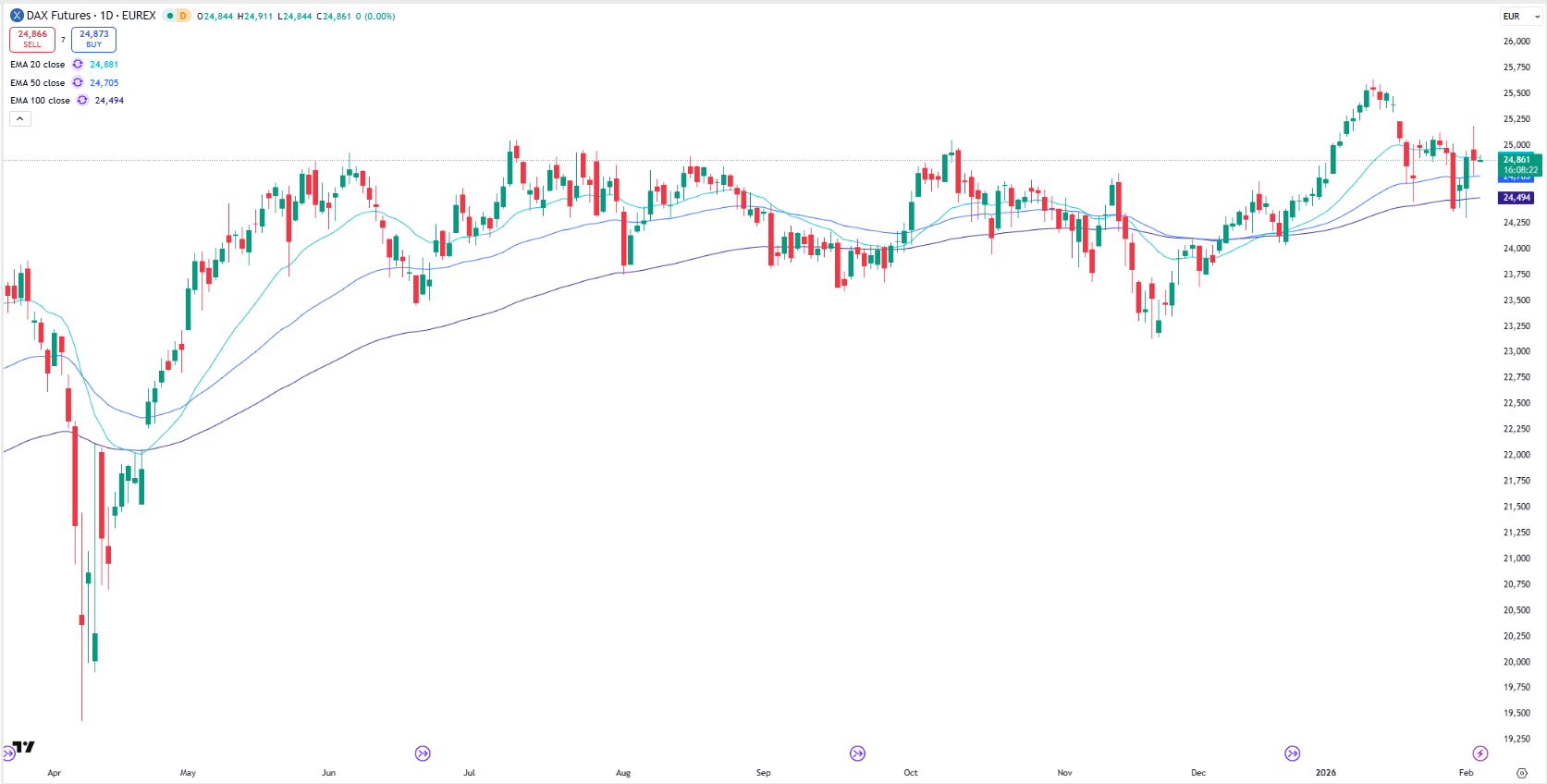
Analysis courtesy of Eurex.
Massive losses in precious metals, a weak US dollar, Bitcoin in free fall – the markets are in turmoil. The latest trigger: the nomination of the new Fed chair. In addition, the Iran conflict continues to smolder. The upcoming ECB meeting is not a major issue.
The nomination of Kevin Warsh as successor to US Federal Reserve Chairman Jerome Powell on Friday shook the markets: the price of gold has since fallen by 18 per cent, with silver falling even more sharply. Bitcoin, which was already weakening, fell further. “The markets apparently assume that Warsh will be better able to preserve the Fed’s independence than previously thought,” comments Ulrich Kater of DekaBank. This made “alternative currencies” to the US dollar appear less attractive.
“Rarely before has a decision of this kind been awaited with such anticipation as this time,” notes Sandro Pannagl of LBBW. This is because the monetary authorities are under massive pressure from US President Trump to lower interest rates and align monetary policy with his agenda. “Whether Warsh will support him in this remains to be seen.” As a member of the Fed’s monetary policy committee from 2006 to 2011, Warsh tended to be a “hawk” and warned of inflation risks. “Recently, however, he has been more vocal in his support for lower interest rates.”
Rapid decline for gold, silver, and cryptocurrencies
The stock markets are still looking weak at the start of the new week, but it’s not exactly a crash. On Monday morning, the DAX was at 24,414, down from 24,489 points at the close of trading on Friday and 25,508 points at its record high three weeks ago. The Stoxx Europe 600 is only slightly below its record high. The Dow Jones and S&P 500 lost ground on Friday, with the Nasdaq 100 falling more sharply. On Monday morning, an ounce of gold cost only $4,554, down from an all-time high of $5,570, while silver was trading at $77 instead of $122. Bitcoin is currently trading at $76,300, down from a high of almost $126,000.
Overdue correction after overheated rally
LBBW sees the sharp decline in precious metals as an overdue correction after an overheated rally and overbought levels. “Although precious metals may continue to trend weakly in the short term, the fundamental drivers remain intact: trade and geopolitical risks, fiscal concerns, and the ongoing diversification of global currency reserves will continue to support precious metal prices in the medium term,” explains LBBW analyst Pannagl. The bank raised its gold forecast to US$5,000 last week.
Stock prices likely to rise again in the medium term
According to Commerzbank analyst Burkhard Fehling, stock markets have recently suffered from the fact that some heavyweights in the tech sector have not been able to fully meet very optimistic expectations. “In addition, some investors fear an imminent military strike by the US against Iran,” Fehling adds. He believes that consolidation could continue in the short term. “However, in the medium term, share prices are likely to rise again, driven in part by a sustained strong US economy and steadily growing corporate profits.”
DZ sees DAX at 27,500 points
DZ Bank is also confident, forecasting the DAX to reach 27,500 points by the end of the year. “This positive assessment is based on favorable monetary and fiscal policy conditions and solid earnings expectations,” explains Birgit Henseler. “Analysts estimate that the companies represented in the DAX will achieve double-digit earnings growth – a significant acceleration compared to previous years.” However, geopolitical risks and weak consumer spending must also be kept in mind.
Meanwhile, the reporting season continues. In Germany, for example, Infineon, Qiagen, Siemens Healthineers, and Hannover Re are publishing their figures this week, while in the US, Google’s parent company Alphabet and Amazon are doing the same. The ECB meeting on Thursday is not a major issue, as no interest rate changes are expected.
Important economic and business data
Wednesday, February 4
11:00 a.m. Eurozone: Consumer prices for January. Inflation in the eurozone is likely to have fallen to 1.8 percent in January, according to DekaBank. It expects the core inflation rate to remain unchanged at 2.3 percent.
Thursday, February 5
8:00 a.m. Germany: December order intake. Commerzbank believes that German industrial order intake rose again in December, mainly due to stronger demand from the government.
1:00 p.m. United Kingdom: Bank of England interest rate decision. DekaBank believes that the Bank of England will leave its key interest rate unchanged at 3.75 percent.
2:15 p.m. Eurozone: ECB interest rate decision. DekaBank expects the ECB to leave key interest rates unchanged again at this meeting. At the press conference, President Lagarde is likely to describe the medium-term inflation outlook as still favorable and the current monetary policy stance as appropriate.
Friday, February 6
8:00 a.m. Germany: Industrial production/exports for December. Helaba expects industrial production to decline by 1 percent compared to the previous month and exports to decline by 0.5 percent.
2:30 p.m. USA: January labor market figures. According to Commerzbank, the labor market is stagnating despite strong economic growth.
Take a view on the European Markets with Phillip Nova now!

Trade Micro-DAX® and Micro-EURO STOXX 50® Futures at EUR1.50*. Learn more here.
Trade CFDs, ETFs, Forex, Futures, Options, Precious Metals, and Stocks on NOVA
Features of trading on NOVA
- Gain Access to Over 20 Global Exchanges
Capture opportunities from over 200 global futures from over 20 global exchanges - Trade Opportunities in Global Stocks
Over 11,000 Stocks and ETFs across Singapore, US, China, Hong Kong, Malaysia and Japan markets. - Charting Powered by TradingView
View live charts and gain access to over 100 technical indicators - True Multi-Asset Trading
Trade CFDs, ETFs, Forex, Futures, Options, Precious Metals and Stocks on a single ledger on NOVA - USD Shares Margin Rate at Only 4.5% p.a
- Fractional Shares from US$1