EN
EN  CN
CN 
Escalating tensions in the Middle East have intensified following a joint military operation involving the United States and Israel targeting sites in Iran. The stated objective of the operation was to weaken Iran’s leadership structure and constrain its nuclear capabilities. Reports indicate that several senior Iranian officials, including Iran’s supreme leader, Ali Khamenei, were killed during the strikes.
In response, Iran launched retaliatory missile attacks on US-linked military installations across parts of the Middle East. The exchange of strikes has heightened regional instability and raised concerns about the risk of broader spillover effects across neighbouring countries.
The humanitarian toll and geopolitical consequences of the conflict remain deeply concerning, and the situation continues to evolve rapidly.
Financial markets initially responded with a classic risk-off shift, with investors moving toward traditional safe-haven assets such as gold. However, despite the seriousness of developments, broader market reactions have so far been measured. Investors appear to be assessing whether the conflict remains regionally contained or risks expanding further.
Missile exchanges have continued, and several Gulf nations remain exposed due to geographic proximity and strategic ties. This has kept global investors cautious, though market pricing currently suggests expectations of contained – rather than systemic – disruption.
Impact on Gold
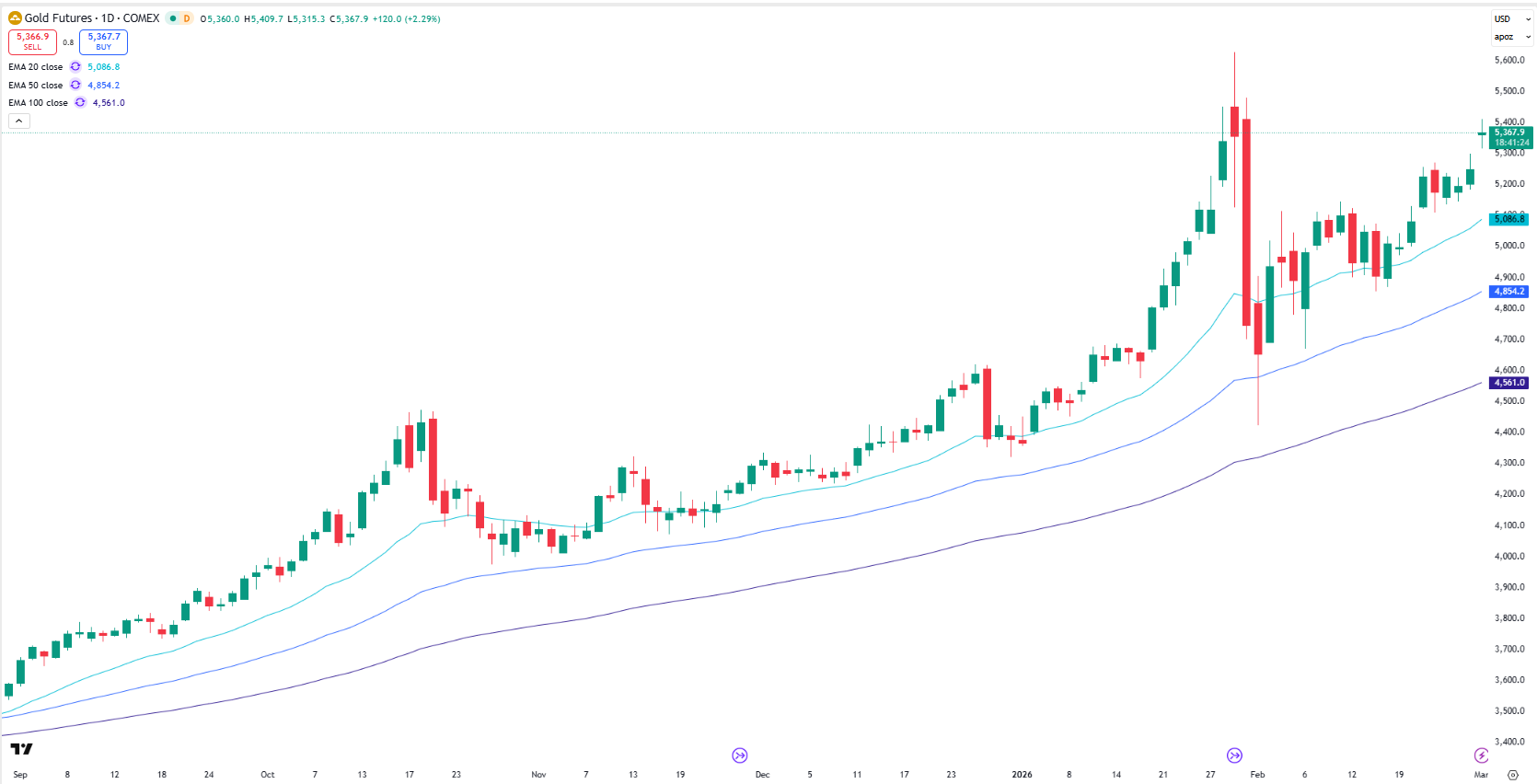
Gold prices have remained supported but relatively restrained despite heightened geopolitical tensions. The initial military escalation prompted a familiar defensive response, with investors increasing allocations to safe-haven assets amid uncertainty.
As of 10:25 am Singapore time, COMEX gold futures were trading at $5,346 per ounce, up 1.87%.
Even so, price gains have been more moderate than the scale of geopolitical headlines might typically imply. Markets appear to be weighing multiple factors – including the possibility of diplomatic engagement, shifting leadership dynamics, and broader macroeconomic conditions – rather than pricing in an extended period of escalating conflict.
From a macro perspective, gold continues to benefit from supportive structural drivers, including falling real yields and ongoing global growth concerns. However, these tailwinds are no longer translating into strong upside momentum. Volatility is likely to remain elevated until there is greater clarity on the geopolitical outlook, but buying conviction appears to be moderating at higher price levels.
Technically, gold has struggled to sustain moves above the $5,400 level. Repeated failure to hold above resistance suggests that while safe-haven demand remains present, momentum is softening. For now, gold continues to carry a geopolitical risk premium, but price action indicates a shift from fear-driven rallies toward consolidation.
In summary, geopolitical risks continue to support gold, but the market appears to be transitioning into a more cautious, range-bound phase while awaiting clearer direction.
Crude Oil
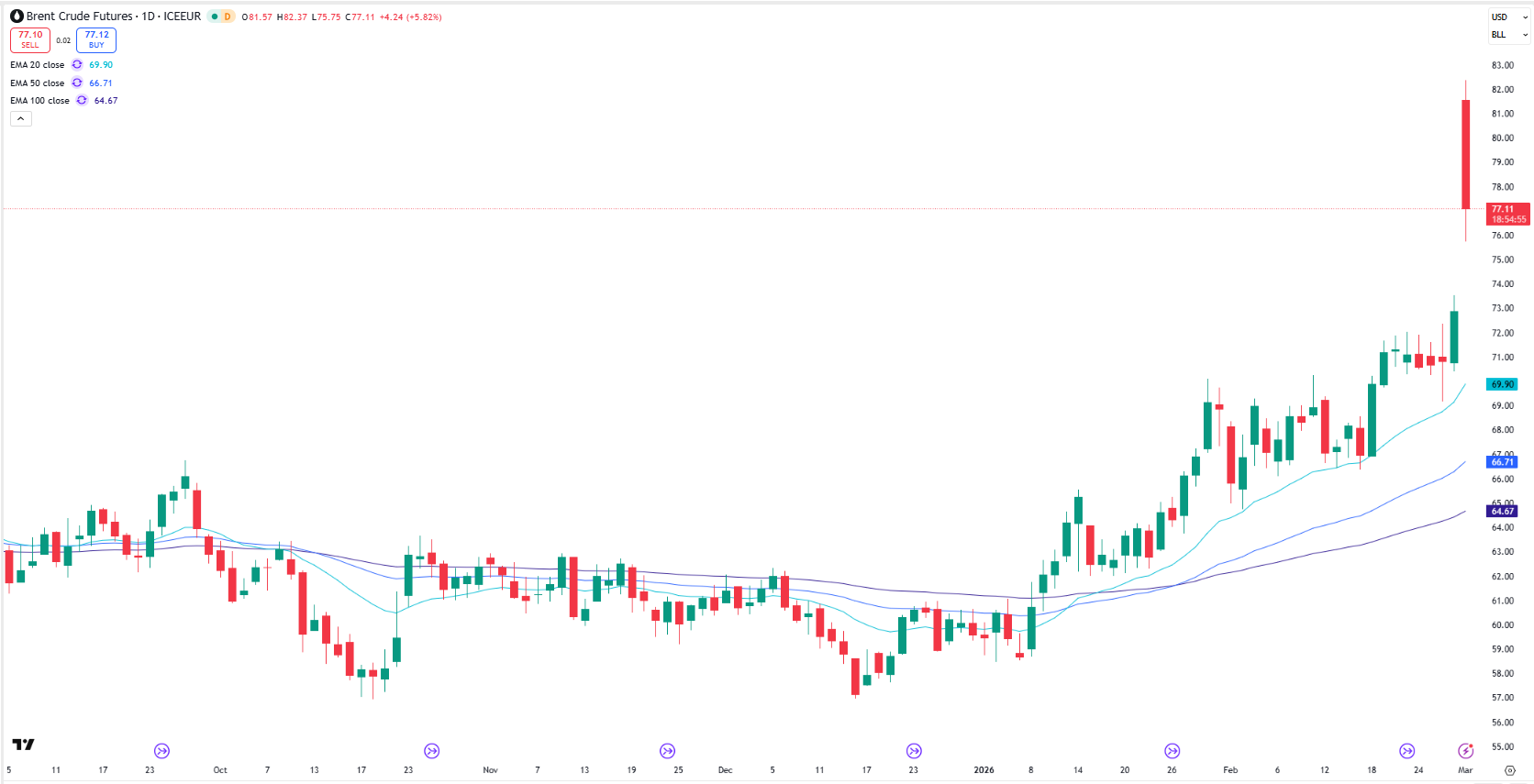
Crude oil prices reacted sharply to the escalation, opening higher in early Asian trading as supply risks came into focus. Brent crude briefly moved above $80 per barrel, levels not seen since January 2025, before partially retracing gains.
As of 9:35 am Singapore time:
- WTI crude: $69.66 per barrel (+4%)
- Brent crude: $76.23 per barrel (+5.24%)
Oil markets are particularly sensitive to developments affecting the Strait of Hormuz, a critical global energy corridor through which roughly 20 million barrels per day of oil transit. Any disruption to shipping flows or insurance costs could significantly impact global energy markets, particularly for major Asian importers such as China and India.
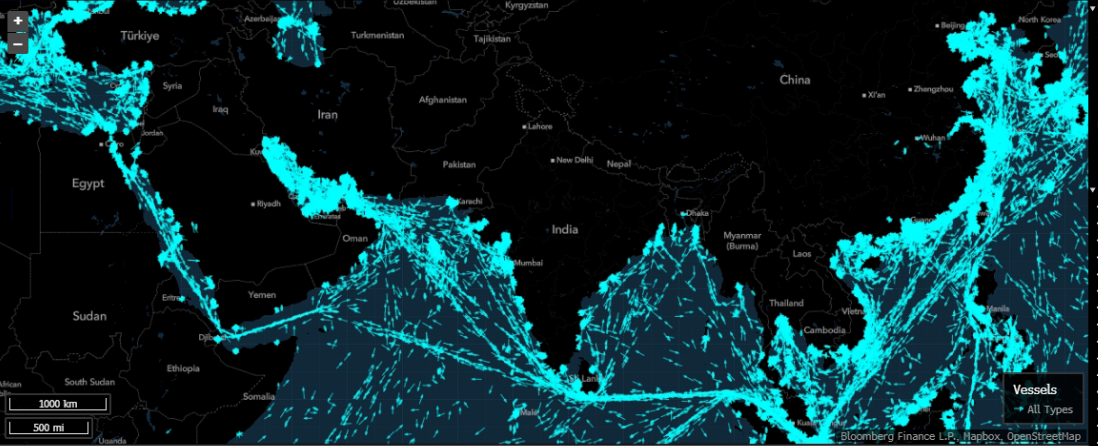
The ongoing conflict has introduced uncertainty around energy supply security, shipping routes, and insurance costs. However, actual physical disruptions remain the key variable determining whether price gains can be sustained.
Energy markets are also balancing geopolitical risk against supply responses elsewhere. Several OPEC members have indicated plans to proceed with previously scheduled production increases, which could help offset potential supply tightness if implemented.
Historically, armed conflicts tend to add inflationary pressure through energy price transmission. The magnitude of impact, however, will depend largely on the duration and intensity of disruptions to production or transport infrastructure.
Asian economies – including Singapore – remain particularly sensitive to Middle Eastern crude supply dynamics. Prolonged instability could raise import costs, reroute shipping lanes, and increase freight and insurance premiums.
Assets Most Sensitive to Developments
- Energy-sensitive and inflation-linked assets remain vulnerable to headline-driven volatility.
- Oil markets may experience sharp price swings, but sustained upside depends on real supply disruption.
- Gold and precious metals continue to provide defensive positioning, though momentum appears to be moderating.
- Asian importers and shipping-related sectors face potential cost pressures if logistical disruptions persist.
Market Perspective
Markets are clearly recognising the seriousness of the conflict and the human and geopolitical risks involved. At the same time, current price behaviour suggests investors view the situation – for now – as a significant geopolitical shock rather than a systemic global crisis.
That assessment could change quickly if the conflict broadens geographically, disrupts major energy infrastructure, or materially alters global trade flows.
Navigate the Crude Oil and Gold Futures market on NOVA, or monitor prices on related ETFs, CFDs and stocks now. Open an account here.
Trade CFDs, ETFs, Forex, Futures, Options, Precious Metals, and Stocks on NOVA
Features of trading on NOVA
- Gain Access to Over 20 Global Exchanges
Capture opportunities from over 200 global futures from over 20 global exchanges - Trade Opportunities in Global Stocks
Over 11,000 Stocks and ETFs across Singapore, US, China, Hong Kong, Malaysia and Japan markets. - Charting Powered by TradingView
View live charts and gain access to over 100 technical indicators - True Multi-Asset Trading
Trade CFDs, ETFs, Forex, Futures, Options, Precious Metals and Stocks on a single ledger on NOVA - USD Shares Margin Rate at Only 4.5% p.a
- Fractional Shares from US$1