
Oil, Tensions and Inflation: The Forces Reshaping Markets in 2026

18 Mar 2026


Geopolitical instability in the Middle East has become a key driver of global asset pricing in recent weeks. What began as a source of short-term volatility is now testing the resilience of global supply chains and monetary policy expectations. As markets digest the implications of potential disruptions to key trade routes, attention has shifted toward how long these pressures may persist and whether they could shape the macro environment for the rest of the year.


Energy Markets: The Strategic Chokepoint

The Strait of Hormuz, a conduit for roughly one-fifth of global oil supply and a significant share of LNG trade, remains central to market sentiment. Any disruption, or even perceived risk, has led to a repricing of energy markets.


Crude oil prices, which traded in the low-$70 range earlier this year, have risen sharply and remain elevated, reflecting a persistent risk premium. This highlights how sensitive markets are to supply-side uncertainty and the stability of key shipping routes.


Sector Divergence and Capital Rotation

Equity market performance has diverged, with clear winners and laggards emerging. Energy producers have benefited from stronger pricing dynamics, while defence-related sectors have seen renewed investor interest amid expectations of sustained spending.


At the same time, higher energy costs are weighing on transportation, logistics and aviation. In Asia, import-dependent economies face additional pressure from rising commodity prices and a stronger U.S. Dollar, which tends to act as a safe-haven during periods of uncertainty.


The Macro Dilemma: Inflation and Policy

Elevated energy prices present a renewed inflationary challenge. Rising fuel and input costs can create second-round effects across the broader economy, complicating the path for central banks.


Policymakers that had previously signalled a shift toward easing may now face a more complex environment, raising the risk of a more stagflationary backdrop, where growth moderates even as inflation remains elevated. This has contributed to a repricing in fixed-income markets, with expectations for rapid rate cuts becoming less certain.


Positioning in a Volatile Environment: Sectors, Stocks and ETFs in Focus

Periods of geopolitical uncertainty often lead to sector rotation rather than broad market exits, with capital flowing toward areas that either benefit from or are more resilient to supply-side shocks.


Some areas investors are closely monitoring include:

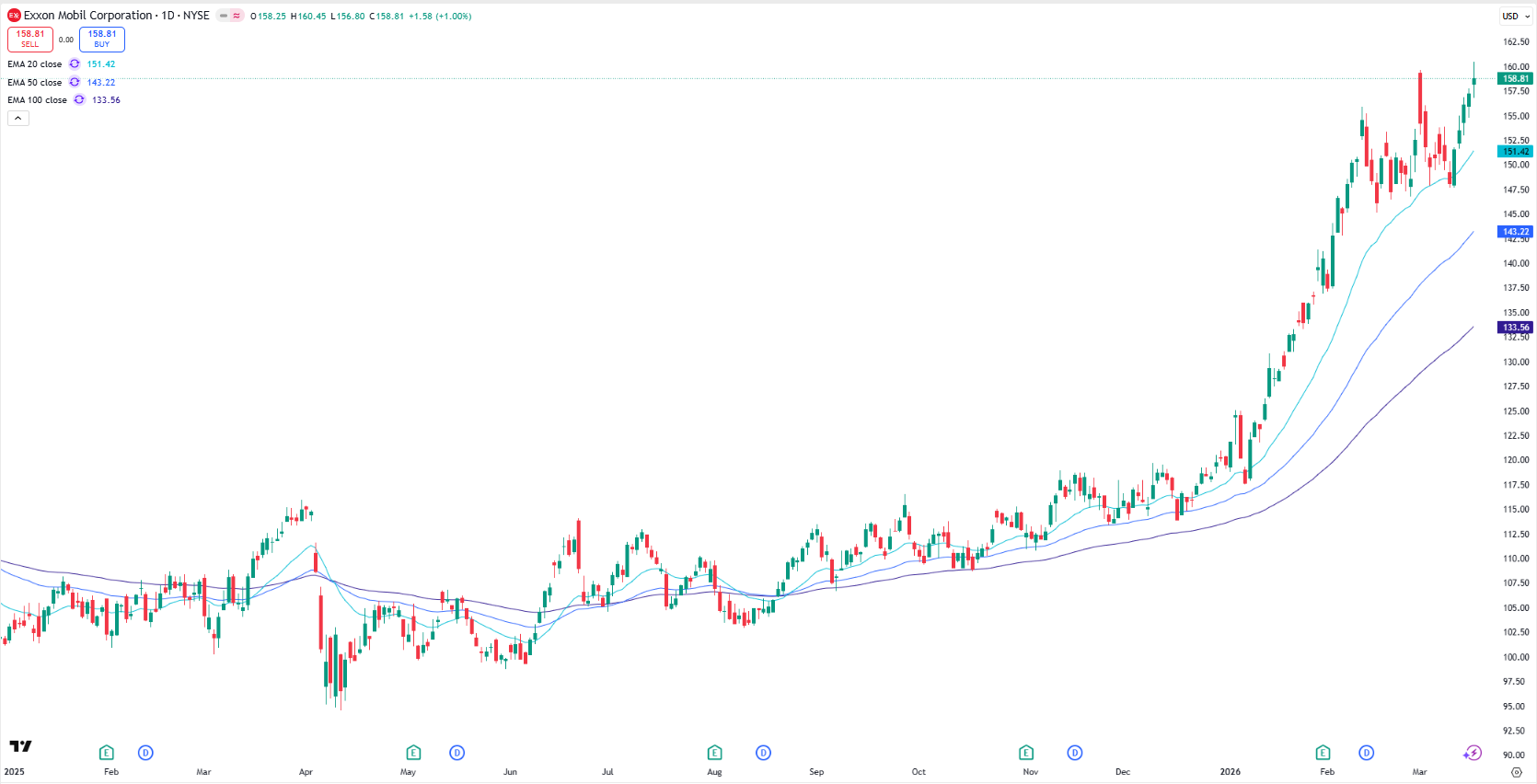
1) Energy Majors such as ExxonMobil (NYSE: XOM, +31.97% YTD) and Chevron (NYSE: CVX, +25.87% YTD), which tend to benefit from elevated crude prices and stronger margins

2) Broad Energy Exposure through ETFs like Energy Select Sector SPDR Fund (AMEX: XLE, +30.87% YTD), offering diversified access to large-cap U.S. energy companies

3) Commodities and Materials Players such as BHP Group (NYSE: BHP, +16.75% YTD) and Rio Tinto (NYSE: RIO, +11.53% YTD), which may benefit from supply constraints and resource demand

4) Clean Energy Exposure through iShares Global Clean Energy ETF (NASD: ICLN, +14.04% YTD), as higher fossil fuel prices reinforce long-term transition themes


These segments reflect how capital may reposition during periods of uncertainty, balancing cyclical opportunities with more defensive characteristics.


Market Resilience and the Path Ahead

Historically, markets tend to reprice geopolitical risks quickly. While initial pullbacks were observed, attention has increasingly turned to corporate earnings resilience and the ability of firms to navigate higher costs.


The current environment also points to a broader structural shift, from “just-in-time” efficiency toward “just-in-case” resilience. Whether the current risk premium persists will depend on the stability of key trade routes and how supply dynamics evolve. For now, heightened volatility remains a defining feature of the global market landscape. 


Navigate Energy-related Stocks and ETFs on NOVA now. Click here to get started!


Trade CFDs, ETFs, Forex, Futures, Options, Precious Metals, and Stocks on NOVA

Features of trading on NOVA

  • Gain Access to Over 20 Global Exchanges
    Capture opportunities from over 200 global futures from over 20 global exchanges
  • Trade Opportunities in Global Stocks
    Over 11,000 Stocks and ETFs across Singapore, US, China, Hong Kong, Malaysia and Japan markets.
  • Charting Powered by TradingView
    View live charts and gain access to over 100 technical indicators
  • True Multi-Asset Trading
    Trade CFDs, ETFs, Forex, Futures, Options, Precious Metals and Stocks on a single ledger on NOVA
  • USD Shares Margin Rate at Only 4.5% p.a
  • Fractional Shares from US$1

An Exchange Traded Fund (ETF) is a marketable security that is formed to track nearly anything, ranging from a specific index, sector, commodity, or increasingly, theme. They are most commonly used to track a basket of stocks, and can typically be accessed through the same channels as regular stocks. ETFs are typically separated into passively-managed ETFs that simply mirror the security they are tracking (e.g. the STI), and actively managed ones that attempt to deliver higher returns or specific investment objectives, often with a pre-specified theme in mind (e.g. ARK Invest’s Innovation ETF).

Why should I trade in ETF CFDs?

  • ETFs have been growing in popularity over the years. 2020 was the best year for ETFs yet, with global equity ETFs seeing more than $1T in inflows within a 12-month period. Using CFDs to gain exposure to ETFs allows for greater capital efficiency because only a portion of the contract value is required as margin to establish a position.
  • ETFs are particularly popular with investors seeking a relatively hassle-free investing experience, while desiring exposure to a range of specific and relatively understandable securities. Trading ETF CFDs brings greater convenience by eliminating the need for traders to hold multiple currencies in order to access global ETFs.
  • An investor wanting exposure to the post-pandemic economic recovery could open a position in the well-known SPDR S&P 500 ETF (SPY), which tracks the performance of the S&P 500. Another investor that may be convinced of the future importance of Environmental, Social and Governance concerns (ESG) may find the increasing selection of ESG-themed ETFs that track a basket of high ESG-rating companies to be a good investment, rather than cherry-picking individual equities by hand. ETF CFDs can act as a powerful tool for traders can profit from both directions of the market by taking on long or short positions.

A look at two ETF CFDs we offer:

1) Has the ARKK been sunk?

ARK Innovation ETF (ARKK) ARKK is an actively managed ETF by ARK Invest that invests in a range of companies based on their innovative and industry-disrupting potential. ARKK’s largest holdings are in companies such as Tesla, Square, and Zoom. ARKK is down around -33% from peaking on 12th Feb and is currently in the red for the year to date as the market experiences a risk-off outflow of funds. Superstar fund manager Cathie Wood has however been consistently doubling down on her bets, buying even more shares in growth stocks that are going through their own tumultuous periods such as DraftKings, Peloton, Teladoc, and Tesla. In her view, ARKK is playing the long game, and remains steadfastly convinced in the long-term prospects of these growth stocks beyond this current bout of volatility. Similarly on outflows, investors are still betting big on ARKK as ARK Invest has only lost about $1.2B in assets this year across all its six funds, compared to seeing an inflow of $15.1B during the same period. Recently, investors have been nervously eyeing ARKK’s basket of tech stocks as their future earnings potential remain vulnerable to erosion through high inflation – the dominant concern of the market in recent weeks. As commodities – the major contributor to the recent heightened inflation fears – drops sharply from record highs, are investor concerns over hyperinflation overblown?

2) Searching for exposure to Asian equities?

iShares MSCI Asia ex Japan ETF (AAXJ) The AAXJ is currently trading -10.6% adrift of all-time highs seen in February, giving up gains in tandem with an Asia-wide equity sell-off at the time. Given that slightly over 40% of the ETF’s holdings are based in China, the ongoing tumult seen in Chinese equities currently have carried over nearly perfectly in the AAXJ, as Chinese investors take a breather after the stellar gains made over the past year. Looking ahead, Asia – and particularly China, is steaming ahead with its economic recovery. China is widely expected to be one of the best-performing major economies this year, providing a major boost to the outlook for corporate earnings. As the rest of Asia and the world gradually opens up their own economies, AAXJ is likely to again benefit from strong Asian outperformance amidst a strengthening trade outlook.

CFD is available for trading on Phillip MetaTrader 5 (MT5).

Features of trading CFD:

  • Trade in both the bull and the bear markets
    The ability to enter a long and/or short position allow traders to take advantage of both rising and falling markets.
  • Smaller barrier to entry
    Flexible and smaller contract sizes. This means that traders will be able to enter into a contract with a modest amount of capital.
  • No expiration date or risk of delivery
    Unlike futures which commonly have a fixed expiration date, CFD allows traders to perpetually hold the position(s). CFD is cash settled, no need to worry about the delivery of the underlying asset.


Benefits of using Phillip MT5:

Trade at zero commission on a dynamic platform that offers low spreads. Integrated with Autochartist and Trading Central Indicators, and available on mobile, web and desktop app, you will never miss a trading opportunity with Phillip MT5.

Register for a FREE 30-day Phillip MetaTrader 5 Demo Account

More Market Trends

S$6.5B Boost: MAS Expands EQDP to Support Singapore Equities

Read More >

Smaller STI Futures, Bigger Singapore Market Opportunities

Read More >